

5 Best Waterproof Pinpointers for Beach Detecting
Table of Contents
- Quick Comparison Table
- 1. DetectorPro Land or Sea: Best Overall Waterproof Pinpointer
- 2. XP MI-4: Best for Long Battery Life and Standalone Use
- 3. Nokta Makro PulseDive: Best 2-in-1 Scuba and Pinpointer Combo
- 4. Minelab Pro-Find 40: Best Depth Detection for Coins
- Saltwater Metal Detecting Tips for Pinpointer Performance
- How to Clean Metal Detector Pinpointer After Beach Hunts
- What Matters Most When Choosing a Beach Pinpointer
Last Updated: August 26, 2026
Quick Comparison Table
| Pinpointer | Waterproof Rating | Best For | Starting Price | Key Feature |
|---|---|---|---|---|
| DetectorPro Land or Sea | 20 feet | Saltwater & mineralized soil | $109.95 | Pulse induction in harsh conditions |
| XP MI-4 | 20 feet | Standalone use & long battery life | $139.00 | 30-hour rechargeable battery |
| Nokta Makro PulseDive | 200 feet | Scuba diving & 2-in-1 versatility | $229.00 | Converts from detector to pinpointer |
| Minelab Pro-Find 40 | 10 feet | Coin hunting & depth detection | $149.00 | 10% deeper detection than previous models |
1. DetectorPro Land or Sea: Best Overall Waterproof Pinpointer
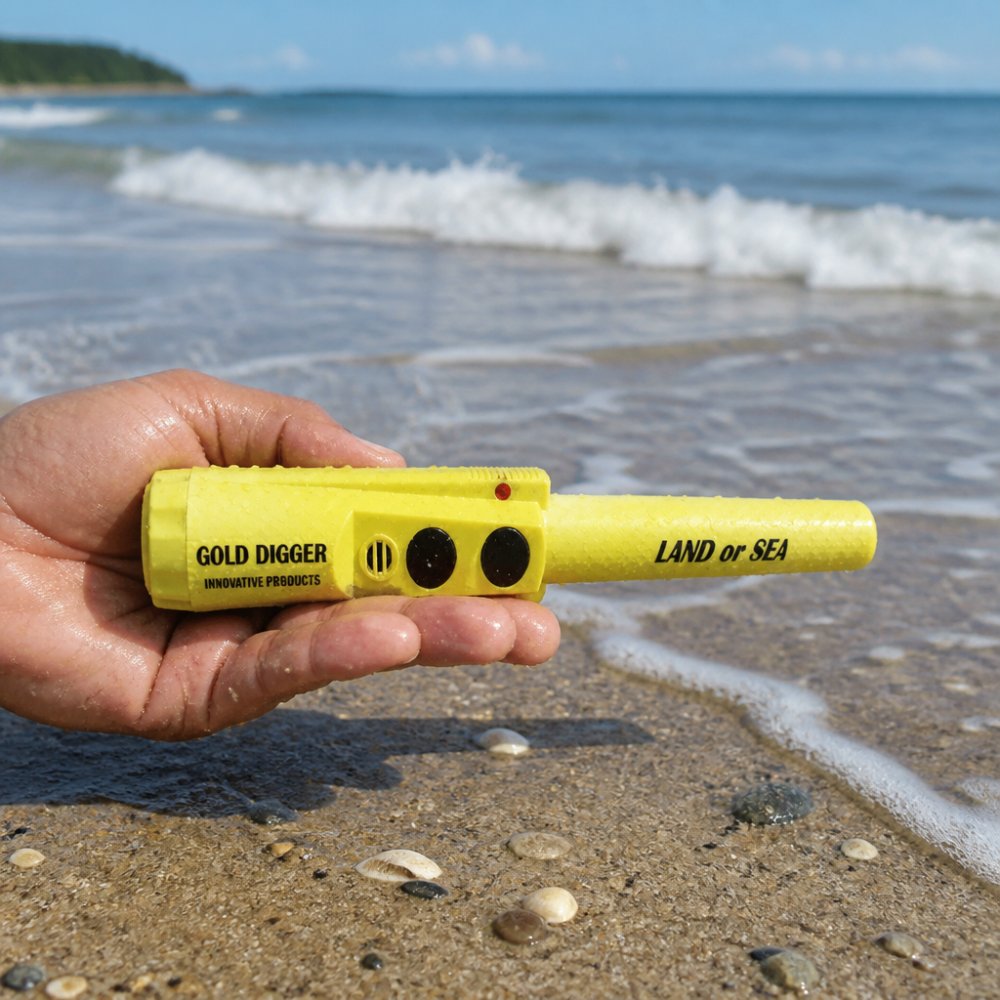
The DetectorPro Land or Sea is the top choice for beach hunters dealing with mineralized soil and saltwater interference. Its pulse induction technology performs reliably where most detectors struggle, cutting through wet sand and high-mineralization challenges that plague ordinary pinpointers.

The waterproof rating to 20 feet combined with saltwater-engineered circuitry eliminates ground balance issues. You get three alert modes, sound, vibration, or both, plus an LED indicator for low-light beach sessions. The pulse induction design automatically retuning in most beach conditions, so you don't need to manually adjust sensitivity when moving between dry and wet sand.
Battery life runs solid on standard batteries, backed by a 2-year warranty. At $109.95, this entry-level price point makes serious beach work accessible without compromising depth, sensitivity, or reliability. You'll spend less time digging trash and more time recovering coins, jewelry, and relics.
2. XP MI-4: Best for Long Battery Life and Standalone Use
The XP MI-4 delivers approximately 30 hours of battery life per charge, roughly double what most competitors offer, covering an entire weekend on a single USB charge (peer-reviewed research). This pinpointer operates as a true standalone unit with no wireless dependency, working with any detector brand or as an independent tool.

Pulse induction at 12 kHz provides the sensitivity depth needed for coin hunting. The 360-degree detection area lets you scan hole walls quickly without repositioning multiple times. Three adjustable sensitivity levels optimize performance for different ground conditions, critical when moving between wet sand, dry sand, and packed soil.
The rubberized grip handles wet conditions without slipping, and the included belt holster keeps it accessible. At 170 grams, the weight stays manageable after hours of pinpointing. The USB charging cable and spare O-rings are practical field accessories. For hunters valuing independence and extended runtime, the XP MI-4 at $139.00 delivers genuine value without paying for unnecessary wireless features.
3. Nokta Makro PulseDive: Best 2-in-1 Scuba and Pinpointer Combo
The Nokta Makro PulseDive is the only pinpointer that converts into a full scuba detector in seconds. If you hunt beaches where targets extend into shallow water or plan underwater recovery, this 2-in-1 system eliminates carrying two separate tools.

Submersible to 60 meters, the PulseDive handles depths that land-only pinpointers cannot reach (peer-reviewed research). Pulse induction delivers stable saltwater performance where mineral-heavy sand creates ground balance chaos for VLF technology. You switch between audio, vibration, audio plus vibration, or LED alerts depending on your environment and dive gear.
The conversion between scuba detector and pinpointer modes takes seconds, swap the coil from the 5.5-inch scuba configuration to the smaller pinpointer coil, and the device adapts instantly. This flexibility appeals to detectorists exploring both beach and underwater opportunities without separate system investments.
Battery capacity sits at 1650 mAh lithium polymer, charging fully in approximately 2 hours via USB. The built-in LED flashlight helps in low-visibility underwater conditions. Nokta includes a hard-shell carrying case, belt holster, security lanyard, and replaceable coils. At $229.00, you're buying two tools in one package, eliminating future equipment purchases for hunters planning to expand beyond beach work.
4. Minelab Pro-Find 40: Best Depth Detection for Coins
The Minelab Pro-Find 40 delivers the deepest detection capability in its class, with a 10% increase in detection depth compared to previous Minelab models (peer-reviewed research). For coin hunters working deeper targets in dense soil or packed sand, that depth advantage translates directly to recovered finds that shallower pinpointers miss.
Five adjustable sensitivity levels optimize performance for specific ground conditions. In highly mineralized beach areas, dial sensitivity down to eliminate noise while maintaining detection depth. The ferrous tone identification feature distinguishes valuable non-ferrous targets from iron junk, saving time when deciding whether to dig.
The DIF technology minimizes interference from nearby operating detectors, critical in crowded beach hunting situations. You avoid false signals that lead to wasted digs and faster target recovery.
Waterproof to 3 meters, the Pro-Find 40 handles wet sand and shallow water work. The bright red handgrip makes it easy to spot if set down, and the lost-alarm feature emits an audible alert if misplaced. At $149.00, this pinpointer sits in the mid-range, positioned between budget options and premium wireless systems. For coin hunters, the depth advantage justifies the investment.
Saltwater Metal Detecting Tips for Pinpointer Performance
Saltwater beaches present unique challenges affecting pinpointer performance. Mineralized soil and salt content create ground balance issues that land-based VLF pinpointers struggle with. Pulse induction technology handles these conditions better because it sends short bursts that resist mineralization interference rather than continuous transmission.
When hunting in wet sand, retuning becomes essential. Most quality pinpointers include a rapid re-tune function accessible via a single button press. Use this feature every 10-15 minutes as you move between dry sand, wet sand, and areas near the tide line, since ground conditions change dramatically in just a few meters.
Sensitivity adjustment matters more in saltwater than freshwater environments. Start at medium sensitivity and adjust downward if you hear excessive chatter or false signals. The goal is eliminating noise while maintaining depth, a balance that shifts depending on sand wetness and proximity to the water line.
:::tip Hunt the wet sand zone where the tide recently receded. This area has higher salt concentration and mineral content, which paradoxically makes targets easier to detect because the ground is more uniform. Avoid the transition zone between wet and dry sand where ground balance becomes most unstable. ::: marine fish finders.
Battery life decreases in saltwater environments. If your pinpointer normally delivers 30 hours of runtime, expect closer to 20-24 hours in active saltwater hunting. Bring a USB charger or spare batteries for full-day beach sessions. Cold saltwater reduces battery efficiency slightly, while warm saltwater increases circuit power demand. Monitor battery level throughout your hunt rather than waiting until critical.
How to Clean Metal Detector Pinpointer After Beach Hunts
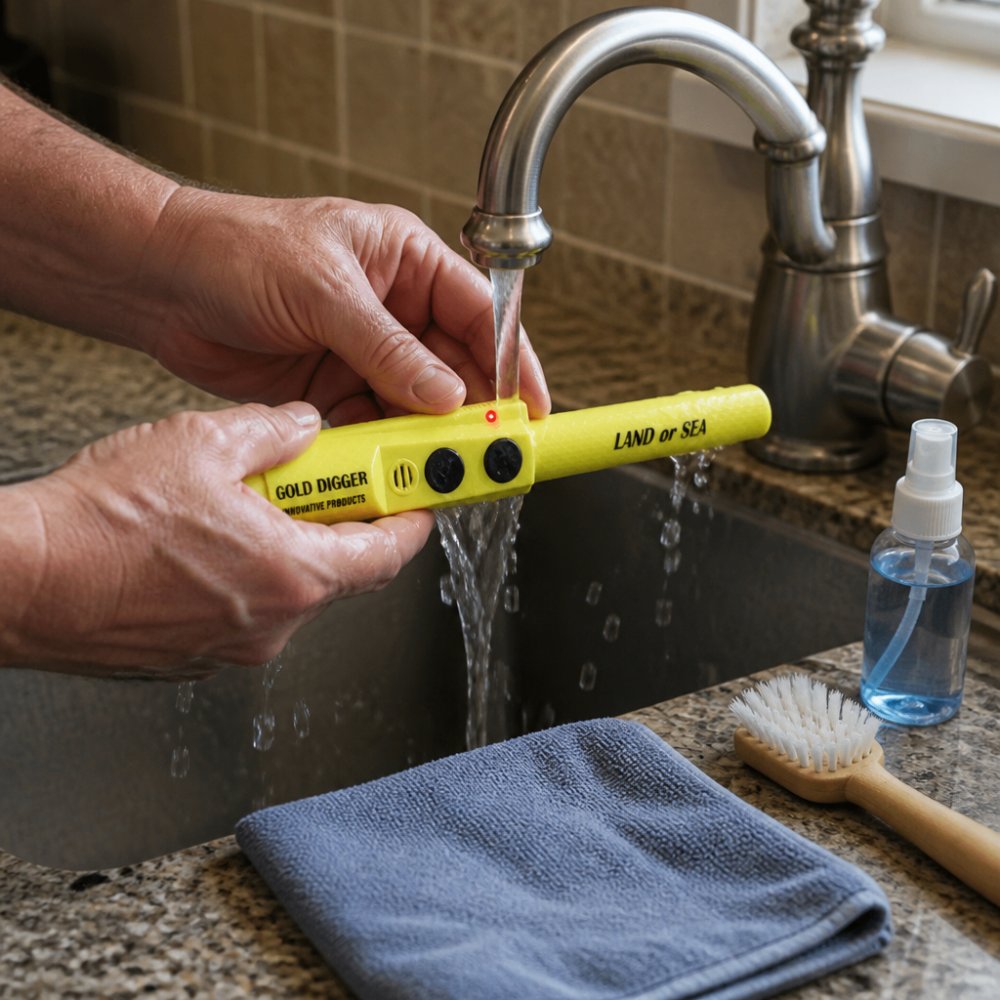
Salt water and sand damage pinpointers through corrosion and abrasion if not cleaned properly. Start cleaning immediately after your hunt; don't wait until salt dries on the coil and casing. Rinse the entire pinpointer under running tap water, paying special attention to the detection tip and crevices where sand collects.
Use a soft cloth to dry the pinpointer thoroughly after rinsing, especially where the coil connects to the main body, moisture trapped here causes corrosion over time. If your pinpointer includes replaceable coils, remove and dry each one separately.
Inspect the waterproof seals and O-rings after each saltwater hunt. If you notice cracks, discoloration, or hardening, replace them immediately. Most quality pinpointers include spare O-rings, and replacements cost just a few dollars. Damaged seals allow water intrusion leading to circuit corrosion and failure.
Store your pinpointer in a dry location away from direct sunlight. UV exposure degrades rubber components and weakens plastic casing over time. A padded carrying case keeps the pinpointer protected between hunts. Never store a wet pinpointer; always ensure it's completely dry first.
For stubborn salt deposits, a soft toothbrush and fresh water work better than cloth alone. Gently brush around the coil tip and textured areas where salt crystallizes. Avoid high-pressure water sources; the force can damage internal seals or push water into protected areas.
Battery compartment access points need extra attention. Salt water corrodes battery contacts and prevents proper charging or operation. After rinsing and drying, use a dry cloth to clean battery contacts before reinserting batteries. For rechargeable models, ensure the USB charging port is completely dry before connecting the charger.
Monthly deep cleaning during heavy beach season prevents long-term corrosion. Soak the pinpointer in fresh water for 10-15 minutes to dissolve remaining salt deposits, then rinse thoroughly and dry completely. This extends pinpointer life significantly, especially for weekly saltwater beach hunting.
What Matters Most When Choosing a Beach Pinpointer
The best waterproof pinpointer balances depth detection, battery reliability, and saltwater performance. Consider your primary hunting environment first. If you work primarily in wet sand and shallow water, pulse induction technology outperforms VLF designs because it resists mineralization interference. If you hunt deeper targets in packed soil, depth capability becomes the deciding factor.
Battery type influences your workflow. Rechargeable lithium batteries offer convenience and lower long-term costs but require charging access. Standard 9V batteries cost more per hunt but work anywhere without planning around charging schedules. For weekend warriors, rechargeable makes sense; for remote beach hunters, standard batteries provide reliability.
Waterproof rating tells only part of the story. A pinpointer rated to 20 feet exceeds most beach hunting needs, you'll rarely work deeper than 3-4 feet in wet sand. More relevant is how the waterproof design affects sensitivity and detection field. Test equipment before buying if possible, or buy from dealers who understand these trade-offs.
Alert options matter for your hunting style. Sound-only alerts fail in noisy beach areas with crashing waves. Vibration-only alerts let you hunt discreetly on crowded beaches. Audio plus vibration gives flexibility for different situations. LED indicators help in low-light conditions but drain battery faster.
Weight and ergonomics affect hunting endurance. A pinpointer used all day should feel comfortable after hours of repetitive pinpointing motions. The sweet spot typically sits between 150-200 grams.
Interference immunity becomes critical if you hunt areas with multiple detectorists. DIF technology or frequency-shift capabilities minimize false signals from nearby detectors, essential in popular hunting spots.
Warranty coverage protects your investment. Most quality pinpointers include 2-year warranties covering manufacturing defects. Check warranty terms before purchasing, especially if you hunt frequently in harsh saltwater conditions.
Choosing the right waterproof pinpointer transforms your beach hunting experience from frustrating to rewarding. The DetectorPro Land or Sea delivers the best overall performance for saltwater conditions at an accessible price point. Whether you prioritize long battery life, scuba versatility, or maximum depth detection, we carry the top models from Minelab, Nokta, and XP with support before and after purchase to help you make the right choice. Visit our top tier google store to compare specifications, read detailed reviews, and find the pinpointer that matches your specific beach hunting needs. Our expert team can guide you through the features that matter most for your hunting style, reach out today to get started with equipment you can trust.
Frequently Asked Questions
What makes a waterproof pinpointer suitable for beach detecting in saltwater?
A beach pinpointer needs IP68 waterproof certification and pulse induction technology to handle saltwater mineralization without false signals. Pulse induction (used in models like the Nokta PulseDive and DetectorPro Land or Sea) delivers stable performance in mineralized and salty soil where VLF pinpointers struggle. Look for depth ratings of at least 20 feet and audio/vibration feedback options to detect targets in challenging beach conditions.
How do I prevent interference between my pinpointer and metal detector?
Many quality pinpointers use DIF (Detector Independent Function) technology, which disengages the coil's magnetic field when switched off. Models like the Minelab Pro-Find 40 and Pro-Find 35 feature DIF to eliminate interference with your operating detector. Keep the pinpointer powered off until you've narrowed your target area, and maintain distance between the two devices when both are active.
Which waterproof pinpointer is best for coin hunting on mineralized beaches?
The Minelab Pro-Find 40 delivers 10% greater detection depth than previous models and includes ferrous tone identification to distinguish coins from junk targets. Its five adjustable sensitivity levels let you fine-tune performance in highly mineralized sand. For underwater coin recovery, the Nokta Makro PulseDive offers full submersion to 200 feet with pulse induction stability in saltwater.
Do I need to rinse my pinpointer after every saltwater beach hunt?
Yes. Saltwater corrodes metal components and can damage seals over time. Rinse your pinpointer with fresh water immediately after use, paying special attention to the coil tip and battery compartment. Allow it to air dry completely before storage. This simple maintenance extends the life of your pinpointer significantly and prevents the saltwater mineralization buildup that degrades detection accuracy.
This article was written using GrandRanker
Leave a comment