


How to Get Permission for Metal Detecting on Private Property
Table of Contents
- Why Permission Matters for Metal Detecting on Private Property
- How to Find Property Owners for Metal Detecting
- Approaching a Landowner: Scripts and Strategies
- Metal Detecting Permission Letter Template and Written Consent
- Metal Detecting Code of Ethics and Responsible Hobby Practices
- Liability Waivers for Metal Detecting and Property Protection
- What to Do If Permission Is Denied
- Post-Permission Etiquette and Site Restoration
- Frequently Asked Questions
Last Updated: September 19, 2026
Why Permission Matters for Metal Detecting on Private Property
Learning how to get permission for metal detecting on private property is not optional, it's the foundation of responsible hobby practice. Without it, you're trespassing. Trespassing carries real legal consequences, from fines to criminal charges. But there's more to it than just staying out of legal trouble.

Permission protects relationships. It opens doors to better detecting sites. Landowners who trust you may grant access to areas with higher artifact potential. They may even share historical information about the property that guides your search.
The code of ethics that serious hobbyists follow demands written consent. This protects both you and the landowner. It clarifies what you can and cannot do. It shows respect for their property and its history. At Treasure Coast Detectors, we work with hobbyists who understand that permission is the first step to ethical, legal detecting, and often the most rewarding one.
How to Find Property Owners for Metal Detecting
Finding the right property owner starts with research. You need to know who owns the land, where the boundaries are, and how to reach them. Public records make this possible.
Using Public Records and County Assessors
County assessor offices maintain property records open to the public. These records show ownership, property boundaries, and contact information. Most counties now offer online searchable databases.
Start with your county assessor's website. Search by address or parcel number. The record will show the owner's name and mailing address. Many records also include phone numbers or email addresses.
If the online database is limited, visit the assessor's office in person. Staff can help you navigate older records or clarify ownership details. This is especially useful for rural properties or land with complex ownership histories.
Property tax records are another valuable resource. Tax assessors maintain detailed information about who pays taxes on a property. These records are public and often easier to search than assessor databases.
Researching Property Boundaries and Title Information
Knowing exactly where a property begins and ends prevents mistakes. A metal detecting session that crosses a property line into neighboring land can create serious problems.
Use county tax maps or GIS (Geographic Information System) maps. Many counties offer free online mapping tools. These show parcel boundaries, owner names, and property lines. Some maps let you measure distances and identify adjacent properties.
Title information reveals more than just current ownership. It shows the property's history, easements, and any restrictions on land use. You can request a title search from a title company, though this usually costs money. For free information, check county land records or courthouse records.
Aerial imagery from Google Maps or county GIS systems helps you visualize the property layout. You can see buildings, fences, and landscape features. This gives you context before you approach the owner.
Approaching a Landowner: Scripts and Strategies
How you ask matters as much as what you ask. The goal is to build trust quickly and show you're serious about responsible detecting.
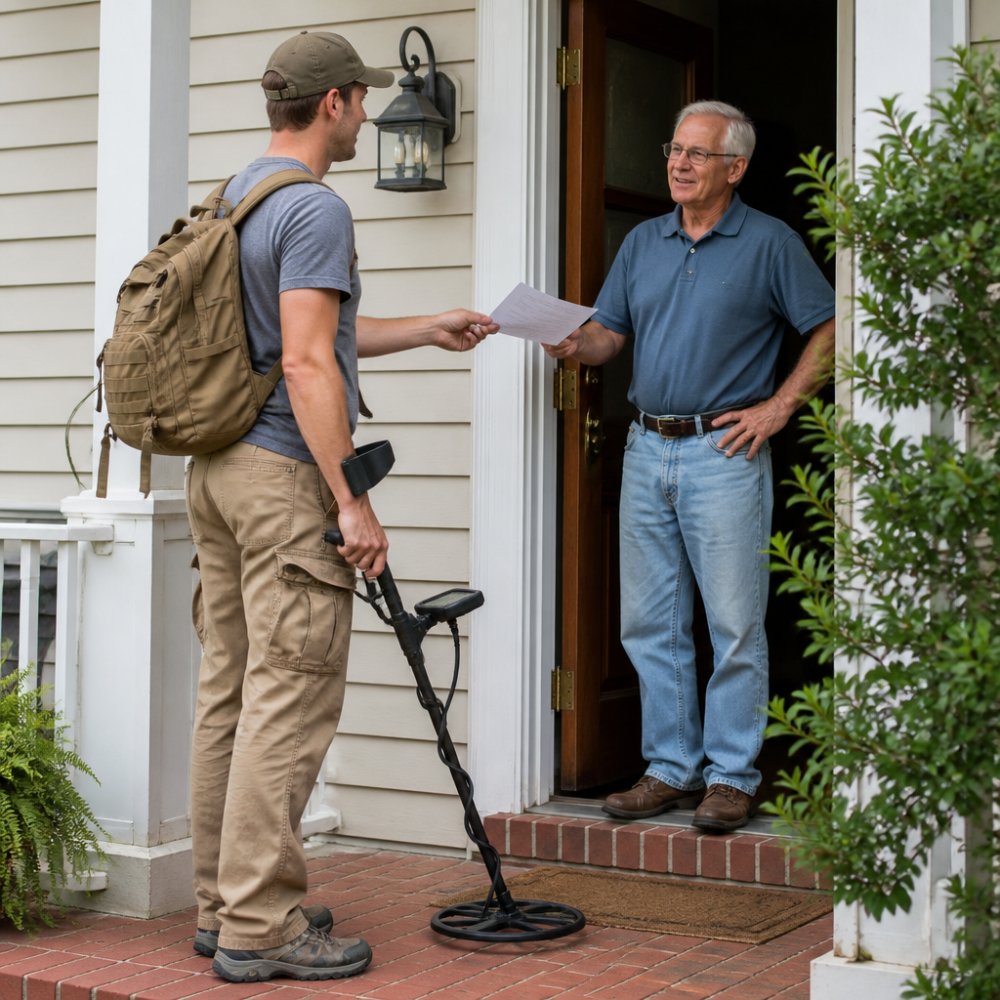
Door-to-Door Approach
Knock during daytime hours when people are likely to be home. Early evening works too. Avoid early morning or late night.
Dress neatly. Bring your detector with you, it shows you're serious and gives context to your request. Carry the permission letter template (discussed below) so you can leave a written copy if the owner agrees.
Here's a script to open the conversation:
"Hi, my name is [Your Name]. I'm a metal detecting hobbyist in the area, and I'm interested in searching your property for coins, buttons, and old artifacts. It's a hobby I really enjoy. I would respect all your property boundaries, fill any holes I dig, and share any interesting finds with you. Would you be open to letting me detect here?"
If they seem interested, continue:
"I have a permission letter here that outlines what I'll do and what I won't. It protects both of us. If you'd like to think about it, I'm happy to leave this with you."
If they say no, thank them and move on. Don't argue or push. A polite rejection today might become a yes tomorrow if you respect their decision.
Phone or Email Outreach
Not every property owner lives on the property. For absentee owners or commercial properties, phone or email works better.
Start with a phone call if you can find a number. Keep it short and friendly:
"Hi [Name], I'm a local metal detecting hobbyist. I'm interested in searching your property at [address] for historical artifacts. It's a hobby I'm passionate about. Would you be open to discussing this?"
Listen more than you talk. Answer their questions honestly. If they seem interested, offer to send a permission letter and follow up in a few days.
Email works well for owners you can't reach by phone. Keep the message brief:
Subject: Permission Request for Metal Detecting at [Property Address]
"Hello [Name],
I'm a metal detecting hobbyist in [area]. I'm interested in searching your property at [address] for coins and historical artifacts. I follow a strict code of ethics that includes respecting property boundaries, filling holes, and getting written permission before any detecting.
If you're interested in discussing this, I'd be happy to provide more details or answer any questions.
Best regards, [Your Name] [Your Phone Number]"
Metal Detecting Permission Letter Template and Written Consent
A written permission letter protects both you and the landowner. It clarifies expectations and creates a record of consent.
Here's a template you can adapt:
METAL DETECTING PERMISSION LETTER
This letter grants permission for metal detecting on the property located at:
[Property Address]
Property Owner: [Owner Name]
Metal Detecting Hobbyist: [Your Name]
Date Permission Granted: [Date]
Scope of Permission:
The property owner grants permission to [Your Name] to conduct metal detecting on the above property for the purpose of locating coins, buttons, jewelry, and historical artifacts.
Conditions and Agreements:
-
The hobbyist will respect all property boundaries and not detect on adjacent properties.
-
The hobbyist will fill all holes dug during detecting activities.
-
The hobbyist will not remove any artifacts without the property owner's knowledge.
-
The hobbyist will not remove or damage any structures, fences, or landscaping.
-
The hobbyist will conduct detecting during daylight hours only, unless otherwise agreed.
-
The property owner may revoke this permission at any time with written notice.
-
The hobbyist assumes all liability for injuries or property damage caused by their activities.
Artifact Ownership:
Any artifacts found belong to the property owner unless otherwise agreed in writing.
Signature:
Property Owner: _________________________ Date: _________
Hobbyist: _________________________ Date: _________
Print two copies. Both parties sign both copies. Each keeps one. This simple document prevents misunderstandings and shows you're professional and respectful.
Metal Detecting Code of Ethics and Responsible Hobby Practices
A code of ethics separates responsible hobbyists from careless ones. It's the foundation of how you interact with landowners, other hobbyists, and the hobby itself.
Respect property and landowner rights. Always get written permission before detecting. Honor the property owner's wishes. Never detect on land that isn't yours without explicit consent.
Fill your holes. Every hole you dig should be filled completely. Use a probe to check before you leave. Unfilled holes damage property and give the hobby a bad reputation.
Keep finds organized. Carry a finds pouch like the CKG Metal Detecting Find Bag or the DetectorPro Gray Ghost "Catch-All" Pouch. These keep your finds secure and your hands free for digging.

Share interesting discoveries. When you find something noteworthy, tell the landowner. They may have historical context. They may want to keep the artifact.
Liability Waivers for Metal Detecting and Property Protection
Liability is a real concern for landowners. They worry about injuries on their property. A liability waiver addresses this concern and protects you both.
Here's a basic liability waiver template:
LIABILITY WAIVER FOR METAL DETECTING
Signature: _________________________ Date: _________
What to Do If Permission Is Denied
Not every landowner will say yes. Some may say no immediately. Others may never respond. Both outcomes require a professional response.
Post-Permission Etiquette and Site Restoration
Permission is a gift. Treat it that way. Your behavior on a property determines whether that landowner will grant permission again, and whether they'll recommend you to neighbors.
Frequently Asked Questions
What's the best way to approach a landowner for metal detecting permission?
Start with respect and clarity. Knock on the door or call ahead, introduce yourself as a hobbyist, and explain what you want to do on their property. Be honest about your hobby, show your equipment, and emphasize that you'll restore any areas you dig. Offer a written permission agreement and discuss liability concerns upfront. A straightforward, professional approach builds trust far better than surprise visits or vague requests. Always follow up with written consent to protect both parties.
Do I need a written agreement or can verbal permission work?
Verbal permission is better than nothing, but written consent is strongly recommended. A written agreement protects both you and the landowner by clearly stating what you can do, where you can detect, what happens to finds, and liability responsibilities. It also prevents misunderstandings if the landowner forgets your conversation or if property changes hands. Use a simple metal detecting permission letter template that covers these key points and ask the landowner to sign and date it.
How do I find out who owns a specific piece of private land?
Start with your county assessor's office, which maintains public records of property ownership. You can search by address or parcel number online or visit in person. The tax assessor's database shows the owner's name and mailing address. Alternatively, use online property lookup tools, check deed records at the county courthouse, or consult a property survey if available. Once you identify the owner, verify current contact information through a phone directory or by visiting the property to look for mailboxes or signage.
Should I offer to share my finds or pay the landowner for metal detecting permission?
Sharing finds or offering payment is a personal choice, not a requirement. Some landowners appreciate a share of valuable discoveries, while others simply want the hobby conducted responsibly on their land. Discuss this openly when you approach them. A small token of appreciation, like a percentage of finds or a modest payment, can build goodwill, but many landowners are satisfied with your commitment to restore the site and follow a code of ethics. Always agree on this beforehand in writing.
Leave a comment