

Is the Minelab Equinox 900 Worth It for Beach Hunting?
Table of Contents
- Beach Hunting Verdict: Where the Equinox 900 Stands
- How the Equinox 900 Handles Wet Sand and Saltwater Mineralization
- Minelab Equinox 900 vs 700 Beach Performance
- Best Metal Detector Settings for Saltwater Beach
- Long-Term Maintenance in Salt Environments
- A seriousdetecting Alternative for Beach Hunters
- When the Equinox 900 Is Not the Right Beach Detector
- Frequently Asked Questions
Last Updated: September 10, 2026
Beach Hunting Verdict: Where the Equinox 900 Stands
The question of is the minelab equinox 900 worth it for beach hunting comes down to whether you want a genuinely submersible multi-frequency detector at the $999 price point and you're willing to learn its settings. It is not worth it if you expect to switch to Beach mode and immediately stop digging bottle caps in wet sand. So before you decide whether the Minelab Equinox 900 is worth it for beach hunting, understand what you're buying: a 5-meter IP68 waterproof machine running Multi-IQ, with 11-inch and 6-inch coils in the box.

Quick Specs and What You Pay For
For $999 you get the detector, an EQX11 11-inch Double-D coil with skid plate, an EQX06 6-inch coil with skid plate, wireless headphones, a charging cable, and a screen protector. The control pod weighs 2.8 lbs, collapses to 24 inches, and runs on an internal lithium-ion battery.
The spec that matters most on a salt beach is waterproofing: IP68, rated to 5 meters, or 16 feet. That is not splash resistance. You can wade past your knees and keep detecting.
Pros and Cons for Saltwater Hunters
What works: Multi-IQ runs several frequencies at once, the core defense against saltwater mineralization. The 6-inch coil is a real asset in trashy wet sand. The 119-segment target ID separates a nickel from a pull tab once you learn the numbers, and iron bias runs 0 to 9.
What doesn't: The learning curve is steeper than the marketing suggests. Beach mode is a starting point, not a solution. The 11-inch coil is heavy in the surf after two hours, and the monochrome LCD is harder to read in direct sun than a color screen.
How the Equinox 900 Handles Wet Sand and Saltwater Mineralization
Wet sand is where single-frequency detectors fall apart. Saltwater is conductive, and wet sand holds a shifting mineral signature that moves with the tide; a single-frequency machine reads that as a target and falses constantly. Multi-frequency processing samples several frequencies at once and cancels most of that response.
But "handles wet sand" is not one condition, it's three, and the 900 needs different settings for each.
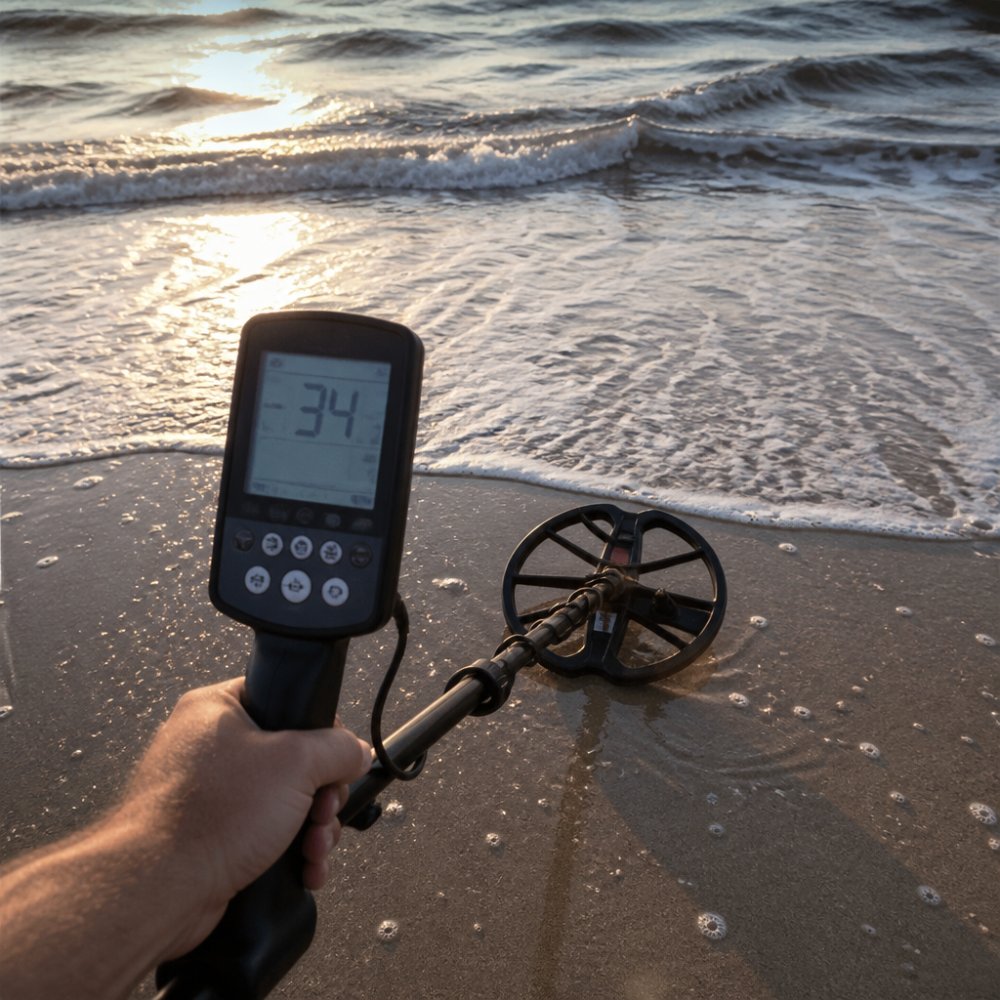
Dry Sand: The Easy Zone
Above the high-tide line, the sand is dry, low-conductivity, and stable. Run Beach or Park mode, push sensitivity toward the top of the 1-28 range, and sweep normally. The 11-inch coil is the right tool for coverage; recovery speed can sit low (2-3) for depth on older drops. Beginners should spend their first hour here learning the tones.
Wet Sand: The Mineralization Zone
Below the high-tide line, the sand is saturated and the salt response climbs. Drop sensitivity until the threshold goes quiet, most hunters land between 16 and 22, and switch ground balance to tracking so the machine follows the shifting signature. Recovery speed moves up to 4-6 because wet sand concentrates targets along the tide line, and iron bias stays low (0-2) unless the beach is littered with modern junk.
Surf and Moving Water: The Separation Zone
In the wash zone, water is moving, targets are shifting, and the salt signal is strongest. This is where the 6-inch coil earns its place: it loses a little raw depth versus the 11-inch but separates a ring from a cluster of foil and sweeps through moving water without loading up. Drop sensitivity further, raise recovery speed to 6-8, and slow your sweep, hunters who struggle in the surf usually swing too fast for their recovery speed.
Depth Performance in Wet Sand vs. Dry Sand
Dry sand is easy ground and the Equinox 900 performs as expected there on coins and rings. Wet sand costs you depth, as it does on every detector. A freshly dropped ring in wet sand is a straightforward target, while a coin that's been through several tide cycles is a deeper, softer signal requiring slower sweeping and careful listening.
Based on owner-forum reports, here's what a well-tuned 900 typically signals on common beach targets, starting points to test on your own sand, not guarantees:
| Target | Dry sand (11" coil) | Wet sand (11" coil) | Surf (6" coil) |
|---|---|---|---|
| Modern clad coin | Strong, clean signal | Clear but softer | Clear within 4-5 in |
| Silver ring | Strong, repeatable | Repeatable, slight loss | Repeatable within 5-6 in |
| Gold ring (small) | Clear | Softer, may need slow sweep | Faint but repeatable |
| Bottle cap | Strong one-way, breaks on 90° turn | Same behavior | Often rejected outright |
Target Identification and Iron Bias on a Salt Beach
Target identification on a salt beach is a probability game, not a guarantee. The 119-segment scale narrows the odds, but pull tabs and bottle caps cluster in ranges that overlap with rings, which is why the "I keep digging trash" complaint is usually a settings problem, not a detector problem.
Iron bias is your main tool. Running it low preserves depth and avoids masking good targets next to iron; running it high silences more junk but can cost you a masked ring. On a trashy beach, start low, dig more, and tighten the bias once you know your beach's junk profile.
Minelab Equinox 900 vs 700 Beach Performance
Both machines share Multi-IQ and the same waterproof rating, so neither is dramatically deeper in saltwater. The 900 adds the 119-segment target ID, a wider sensitivity range, more adjustable recovery speed and iron bias, vibration on the handgrip, a control pod flashlight, and the 6-inch coil in the box. The 700 is lighter on features and price.
For dry sand and casual coin shooting, the 700 does the job, though is the minelab equinox 900 worth it for beach hunting is the question that matters once wet sand and surf enter the picture. For wet sand, surf hunting, and trashy beaches where target separation decides your day, the 900's extra adjustment range and included small coil justify the step up. If you already own a 700 and hunt mostly dry sand, upgrading buys refinement, not new capability.
| Feature | Equinox 700 | Equinox 900 |
|---|---|---|
| Target ID segments | Fewer, coarser | 119 segments |
| Coils included | One | 11-inch + 6-inch |
| Waterproof rating | 5 m IP68 | 5 m IP68 |
| Iron bias range | Narrower | 0 to 9 |
| Recovery speed | Fewer steps | 1 to 8 |
| Best for | Dry sand, parks | Wet sand, surf, trash |
Best Metal Detector Settings for Saltwater Beach
The best metal detector settings for saltwater beach start with Beach mode, automatic ground balance, moderate sensitivity, and low iron bias. Everything else is tuning for your beach on the day.
Beach Mode Setup and Ground Balance
Start in Beach mode. Let the machine ground balance automatically, then switch to tracking if the sand changes as you move through the tide line, tracking is your friend in the intertidal zone, where the ground shifts every few meters.
Sensitivity, Recovery Speed, and Iron Bias Adjustments
Sensitivity runs 1 to 28; high sensitivity in wet sand amplifies salt chatter, so back it down until the threshold is quiet and stable. Recovery speed runs 1 to 8, higher separates targets in trash, lower gains depth in clean sand. Iron bias runs 0 to 9: set it low on a junky beach and accept more digging, or raise it in clean wet sand.
Long-Term Maintenance in Salt Environments
Salt is the slow killer of beach detectors, and maintenance is where most owners get lazy. Salt corrosion is a common reason a working beach machine starts falsing or dies. Here's a maintenance protocol to consider.
After Every Saltwater Session
Rinse the coil, shaft, and control pod with fresh water, not just the coil. Salt crystals creep into the shaft joints and coil connector, causing corrosion that shows up months later as intermittent falsing. The control pod is IP68 rated to 5 meters, but that assumes clean seals; a rinse removes the salt film before it wicks into a joint.
Do not use a high-pressure spray. A gentle stream from a hose or a dunk in a bucket is enough. High pressure can force water past a seal that would otherwise hold.
Drying and Storage
Dry everything with a towel before storage, and never store the detector collapsed with saltwater trapped in the shaft. Extend the shaft, wipe the joints, and let it air-dry fully before collapsing it. A quick wipe-down after each session beats a deep clean once a month, salt damage is cumulative.
The Seals and Connectors
Check the coil connector and battery compartment seal periodically for grit, since a single grain of sand can compromise waterproofing. A soft brush and fresh water clear most grit. If a seal looks flattened, cracked, or has lost its elasticity, replace it before your next water hunt, the part is cheap and the failure mode is a flooded control pod.
The Shaft and Hardware
The carbon-fiber shaft on the 900 resists corrosion better than aluminum, but the joints, cam locks, and hardware still need attention. A light silicone-based lubricant on the cam locks keeps them moving smoothly and adds a salt barrier. Avoid petroleum-based lubricants, which degrade plastic and rubber over time.
Battery Care in a Salt Environment
The internal lithium-ion battery is sealed, but the charging port is a common failure point. Wipe the port dry before charging, and never charge a wet detector. For off-season storage, charge to roughly half capacity and top it up every few months.
A Simple Maintenance Schedule
| Frequency | Task |
|---|---|
| After every saltwater hunt | Fresh-water rinse, towel dry, extend shaft to air-dry |
| Weekly (heavy use) | Inspect coil connector and battery seal for grit |
| Monthly | Lubricate cam locks, check seals for wear |
| Seasonally | Deep clean shaft joints, inspect charging port, top up battery |
A seriousdetecting Alternative for Beach Hunters
If you're searching for a seriousdetecting alternative for beach hunters, the practical question is what you get for your money. At Treasure Coast Detectors, the Minelab Equinox 900 at $999 is our standing recommendation for wet sand and surf work, and the 6-inch coil in the box is a large part of why. For more depth and faster separation, the Minelab Manticore at $1,499 runs Multi-IQ+ with enhanced target identification. If your priority is diving rather than wading, the Minelab Excalibur II at $1,699 is fully waterproof to 200 feet.

We're a Google Top Tier Store and an authorized Minelab dealer, and we use these machines ourselves. That matters more than it sounds: Minelab's official Equinox 900 specifications confirm the IP68 rating and Multi-IQ technology, but the settings that make a machine behave on your beach come from time on the sand, not the spec sheet.
When the Equinox 900 Is Not the Right Beach Detector
The Equinox 900 is the wrong detector if you dive rather than wade. Its 5-meter rating covers surf and shallow water, not scuba work, and a dedicated underwater machine will serve you better. It's also wrong if you want zero learning curve: this detector rewards reading the manual and testing settings.
And it's the wrong pick if your budget is tight and you hunt mostly dry sand. Spend less and put the difference toward a pinpointer, which improves recovery speed more than a higher-end detector will.
guidance from the National Park Service on responsible detecting on public lands is worth reading before you hunt anywhere with restrictions, and the American Meteorological Society's background on tide and coastal processes helps explain why the wet sand line moves the way it does.
The real challenge with beach hunting isn't picking a detector, it's matching your machine's settings to the ground under your feet, and that takes guidance from people who actually hunt. Treasure Coast Detectors carries the Minelab Equinox 900, the Manticore, the Excalibur II, and the Nokta Legend 2, and every purchase comes with expert support before and after the sale plus free US shipping. Get started with Treasure Coast Detectors and hunt your next tide line with a machine set up for the sand you're standing on.

Frequently Asked Questions
Is the Minelab Equinox 900 worth it for beach hunting?
For most beach hunters, yes. The Equinox 900 handles saltwater mineralization with Multi-IQ technology, offers 119 target ID segments, and is waterproof to 5 meters (16 feet). At $999, it costs less than the Manticore but delivers strong wet-sand performance. If you hunt mainly dry sand or freshwater, the Equinox 700 saves you money, but for regular saltwater beach use, the 900's upgrades justify the price.
What are the best metal detector settings for saltwater beach?
Start with Beach Mode, ground balance tracking, sensitivity around 18-22, recovery speed 4-6, and iron bias 2-4. Lower sensitivity if the detector becomes noisy over wet sand. Use the 11-inch coil for coverage and the 6-inch coil in trashy areas. These settings help the Equinox 900 manage saltwater mineralization while maintaining depth and target separation.
How does the Equinox 900 compare to the 700 for beach performance?
The Equinox 900 adds a 119-segment target ID (vs. 50 on the 700), a 3-piece carbon-fiber shaft, vibration, and a flashlight. On the beach, the 900's finer discrimination helps separate coins from bottle caps in wet sand. Both are waterproof to 5 meters, but the 900's extra features and slightly better depth in mineralized ground make it the stronger choice for serious saltwater hunters.
Does the Equinox 900 require special maintenance after saltwater use?
Yes. Rinse the coil, shaft, and control pod with fresh water after every saltwater session to prevent corrosion. Remove the skid plate and clean sand from the coil. Dry everything with a soft cloth before storing. The IP68 rating protects against water, but salt crystals can build up on the shaft locks and coil connector, so a quick freshwater rinse extends the detector's life.
What is a good seriousdetecting alternative for beach hunters?
Treasure Coast Detectors is a Google Top Tier Store and authorized Minelab dealer offering the Equinox 900 at $999 with free U.S. shipping and expert support before and after purchase. Unlike big-box alternatives, they provide real detector experience and curated bundles, so you get the right setup for saltwater beaches without guesswork.
Leave a comment