

Best Detector for Wet Salt Sand: 2026 Guide
Table of Contents
- Why Wet Salt Sand Demands a Specialized Detector
- Multi-Frequency Metal Detector Technology Explained
- Top Detectors for Wet Salt Sand Conditions
- Comparison Table: Specs That Matter in Salt Water
- How to Set Up Metal Detector for Beach Success
- Best Beach Metal Detecting Tips for Wet Sand
- Maintenance and Post-Hunt Care in Saltwater
- Which Detector Should You Choose?
Last Updated: August 28, 2026
Why Wet Salt Sand Demands a Specialized Detector
Wet salt sand is one of the most challenging environments for metal detecting. The combination of conductive saltwater and mineralized soil creates electromagnetic interference that causes false signals, depth loss, and target masking on standard detectors. Detectors designed for parks and fields lose depth penetration, struggle with ground balance, and produce audio noise that makes target identification nearly impossible.
At Treasure Coast Detectors, we offer detectors that perform well in wet salt sand, many of which share one critical feature: simultaneous multi-frequency technology. Unlike single-frequency detectors that struggle with mineralization, multi-frequency detectors run multiple frequencies at once, adapting in real time to ground conditions.
Multi-Frequency Metal Detector Technology Explained
Simultaneous multi-frequency technology operates multiple frequencies at the same time, allowing the detector to adapt instantly to changing ground conditions. Traditional VLF (Very Low Frequency) detectors run at a single frequency, which fails in highly mineralized environments like beaches. Multi-frequency detectors transmit across a range of frequencies, typically 4 kHz to 45 kHz, and analyze the response simultaneously. When ground mineralization interferes with one frequency, another compensates, creating stable ground balance without manual adjustment.
A detector using simultaneous multi-frequency technology can offer greater depth in mineralized soil compared to single-frequency alternatives. Recovery speed, the detector's ability to detect targets close together, improves, separating valuable targets from junk in trashy areas near the waterline.
Target ID accuracy improves with multi-frequency technology because the detector analyzes conductivity across multiple frequencies. A gold ring produces a different frequency signature than a bottle cap. Multi-frequency detectors cut through saltwater noise and identify targets more accurately, reducing false positives.
Top Detectors for Wet Salt Sand Conditions
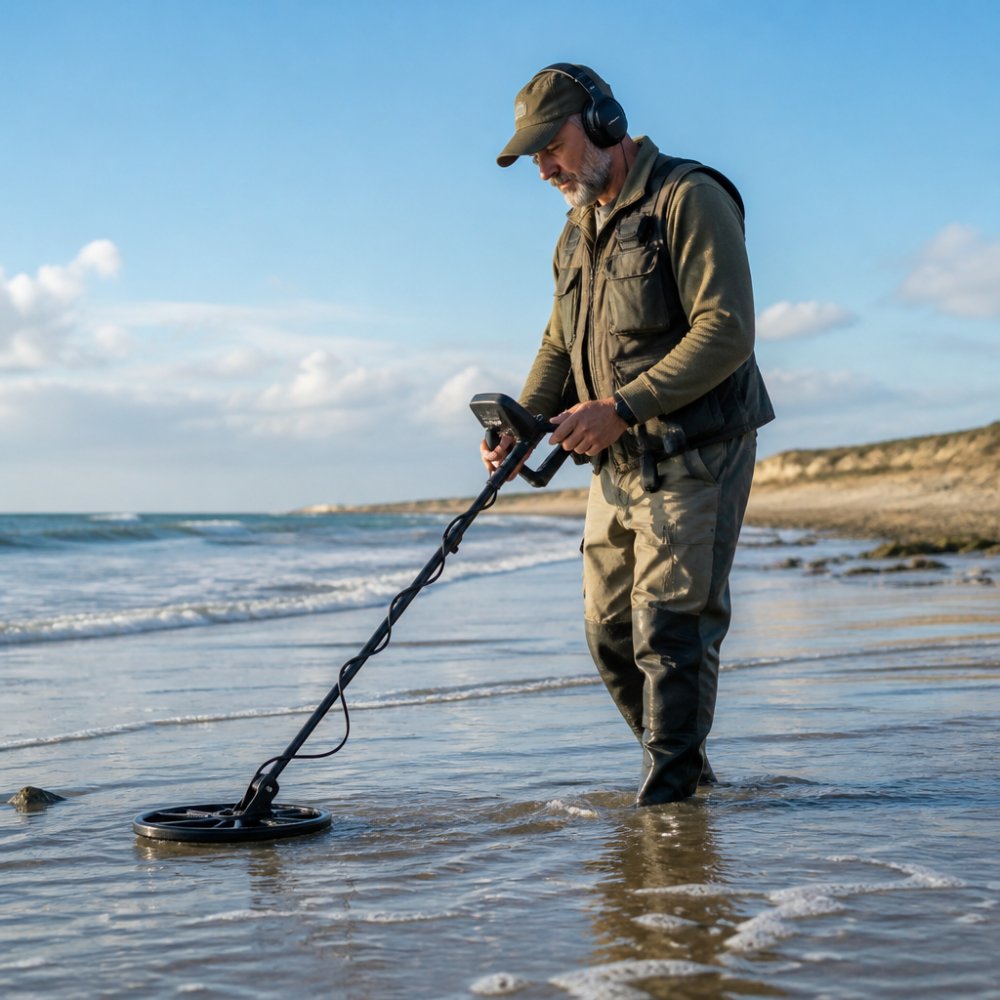
1. Minelab Manticore Multi-IQ+: Maximum Depth and Separation
The Minelab Manticore Multi-IQ+ is a top choice for detectorists who refuse to compromise on performance. Multi-IQ+ technology runs 28 frequencies simultaneously, delivering exceptional ground balance stability and target separation even in extreme mineralization. Recovery speed is exceptional, it detects targets separated by just 2-3 inches, which matters in trashy areas near old pier pilings or shipwrecks. Waterproof to 5 meters (16 feet), the Manticore performs in shallow water and wet sand. Battery life runs 12+ hours on a full charge. The detector weighs 3.2 pounds with the standard coil.
At $1,499.00 from Treasure Coast Detectors, this is a tool that can transform results for serious hunters.
Pros:
- 28 simultaneous frequencies for unmatched ground balance
- Fastest recovery speed; detects closely-spaced targets others miss
- Exceptional depth penetration in wet salt sand
- Lightweight carbon shaft reduces fatigue
- Proven saltwater stability
Cons:
- Steep learning curve for beginners
- Overkill for casual beachcombers
- Battery requires USB charging
2. Minelab Excalibur II: Professional Saltwater Stability
The Minelab Excalibur II is purpose-built for saltwater environments and delivers unmatched stability in the surf zone. BBS (Broad Band Spectrum) technology adapts to saltwater conductivity in real time. Waterproof to 200 feet (66 meters), it's fully submersible for scuba diving and underwater recovery. The trade-off is audio response only, no visual target ID screen. The detector weighs 3.8 pounds, and the fixed 10-inch coil means you can't swap coils.
At $1,699.00 from Treasure Coast Detectors, the Excalibur II justifies the price if you hunt underwater or in heavy surf regularly.
Pros:
- Fully submersible to 200 feet; unmatched for underwater hunting
- Exceptional saltwater stability
- Automatic ground balance requires minimal adjustment
- Long battery life (14-19 hours per charge)
- Proven design used by professional recovery teams
Cons:
- Audio-only target ID; no visual display
- Heavier than Multi-IQ+ detectors
- Fixed coil size limits adaptability
- No wireless headphone option
3. XP Deus II: Wireless Freedom and Fast Recovery
The XP Deus II delivers exceptional performance with a focus on ergonomics and wireless convenience. It's the lightest detector in this lineup at 2.3 pounds, ideal for hunters spending 8+ hours per day without fatigue. Fast Multi-Frequency (FMF) technology operates across 4-45 kHz simultaneously, providing excellent ground balance in wet salt sand. The WS6-ST stereo wireless headphones eliminate cable tangles, and the remote control lets you adjust settings on the fly. Waterproof to 20 meters (66 feet), the Deus II handles wet sand and shallow water. Battery life runs up to 20 hours.
At $1,699.00 from Treasure Coast Detectors, choose the Deus II if ergonomics and wireless convenience matter more than maximum depth.
Pros:
- Fully wireless design eliminates cable hassles
- Lightweight at 2.3 pounds; best for extended sessions
- Fast recovery speed suitable for trashy beaches
- 12 factory programs plus 12 custom programs
- Excellent battery life (up to 20 hours)
- Smaller 9-inch coil provides better target separation
Cons:
- Wireless system requires charging three components
- Slightly slower recovery speed than the Manticore
- Steeper learning curve; 24 program options can overwhelm beginners
- Limited customer support network compared to Minelab
4. Minelab Equinox 900: Balanced Performance at Mid-Range Price
The Minelab Equinox 900 delivers strong performance. Multi-IQ technology runs seven simultaneous frequencies, providing excellent ground balance in wet salt sand and good target separation in trash. The Equinox 900 includes two coils: an 11-inch standard coil for general hunting and a 6-inch coil for tight spaces and trashy areas. Waterproof to 5 meters (16 feet), it handles wet sand and shallow water. The control pod has a backlit LCD display showing target ID, depth estimate, and sensitivity level. Battery life is 12+ hours.
At $999.00 from Treasure Coast Detectors, the Equinox 900 is an excellent option for serious beach detecting.
Pros:
- Excellent value; proven Multi-IQ technology at mid-range price
- Two included coils (11-inch and 6-inch) for different scenarios
- Visual target ID display makes learning easier
- Lightweight at 2.8 pounds
- Wireless headphone compatibility
- Strong aftermarket support
Cons:
- Slower recovery speed than the Manticore
- Seven frequencies instead of 28; less ground balance stability in extreme mineralization
- Internal lithium-ion battery (no AA backup option)
- Slightly heavier than the Deus II
5. Minelab Vanquish 360: Budget-Friendly Entry Point
The Minelab Vanquish 360 is an affordable multi-frequency detector, ideal for beginners testing the hobby or families entering beach detecting. Multi-IQ technology runs three simultaneous frequencies, providing basic ground balance suitable for wet sand. The 10-inch V10X coil is waterproof and handles wet sand. The detector is fully waterproof to 5 meters (16 feet). The control interface is simple: three search modes (Park, Beach, All Metal) and five sensitivity levels. Battery life runs 12+ hours on AA batteries (four required). The detector weighs 2.9 pounds.
At $249.00 from Treasure Coast Detectors, the Vanquish 360 is ideal for casual beachcombing and teaching kids about metal detecting.
Pros:
- Extremely affordable entry point ($249.00)
- Simple operation; ideal for beginners and families
- Multi-frequency technology (three frequencies) provides decent ground balance
- Lightweight and portable
- Waterproof to 5 meters for wet sand and shallow water
- AA battery option means replacements are always available
Cons:
- Limited depth compared to higher-end models
- Slower recovery speed; misses targets close together in trash
- Three frequencies provide basic ground balance only
- Audio response only; no visual target ID display
- Limited customization options
- Not suitable for serious hunters in highly trashy environments
Comparison Table: Specs That Matter in Salt Water
| Detector | Price | Frequency Range | Waterproof Depth | Recovery Speed | Weight | Best For |
|---|---|---|---|---|---|---|
| Minelab Manticore Multi-IQ+ | $1,499.00 | 28 simultaneous | 5m (16 ft) | Fastest | 3.2 lbs | Maximum depth and separation |
| Minelab Excalibur II | $1,699.00 | Multiple (BBS) | 66m (200 ft) | Fast | 3.8 lbs | Underwater and deep water |
| XP Deus II | $1,699.00 | 4-45 kHz | 20m (66 ft) | Fast | 2.3 lbs | Wireless convenience and comfort |
| Minelab Equinox 900 | $999.00 | 7 simultaneous | 5m (16 ft) | Good | 2.8 lbs | Balanced performance, mid-range budget |
| Minelab Vanquish 360 | $249.00 | 3 simultaneous | 5m (16 ft) | Moderate | 2.9 lbs | Beginners and casual hunting |
How to Set Up Metal Detector for Beach Success
Start with ground balance. On the beach, mineralization varies dramatically, wet sand near the waterline is more conductive than dry sand above the tide line. If your detector has automatic ground balance with tracking, enable it. If it offers manual ground balance, run the routine in the wettest sand you'll hunt, then lock it.

Sensitivity (gain) controls search aggressiveness. Start at 50% sensitivity and hunt for 30 minutes. If you're getting consistent audio noise, lower sensitivity to 40%. If you're finding targets easily, try 60%. Beach hunting typically runs 50-65% sensitivity.
Discrimination (iron bias) rejects ferrous targets like nails. Use light iron discrimination (1-3 on a 0-9 scale) for jewelry hunting. Use moderate discrimination (4-6) for coin shooting.
Recovery speed controls how quickly the detector resets between targets. Beach hunting typically runs 5-6 on a 1-8 scale. In extremely trashy areas, increase to 7. In open sand, decrease to 4.
Audio response should be set to "all tones" or "multi-tone" mode for full target ID range feedback.
Best Beach Metal Detecting Tips for Wet Sand
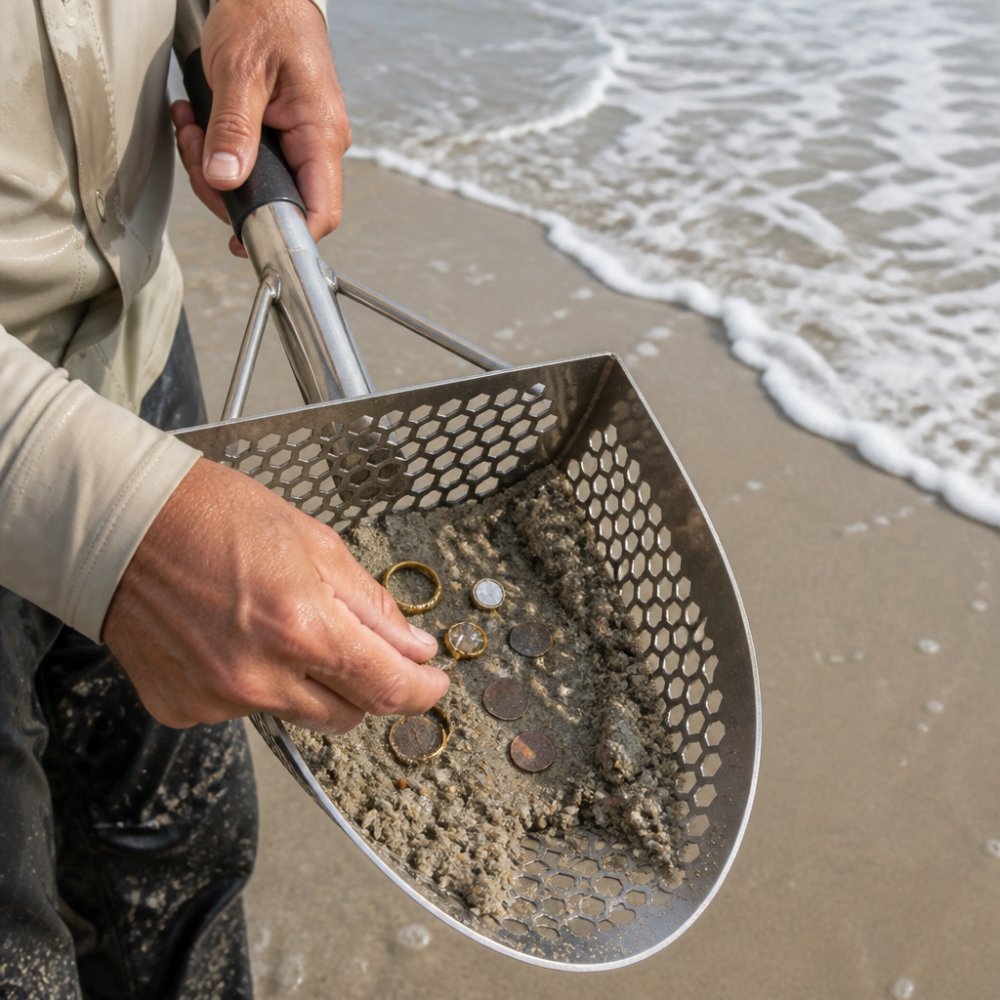
Hunt the wet sand, not the dry sand. Coins, jewelry, and relics migrate to the waterline during storms and heavy surf. The area from the tide line down to knee-deep water can hold more targets than dry sand 50 feet inland. Spend a significant portion of your time in wet sand and shallow water.
Work the slope systematically. Walk parallel to the waterline in 10-foot passes, moving from high tide line to knee-deep water. Mark productive zones (areas where you find 3+ targets per hour) and hunt them first on future trips.
Coil angle matters in wet sand. Keep the coil parallel to the ground surface. Tilting changes the detection pattern and reduces depth. Slow, controlled swings (2-3 seconds per swing) allow thorough ground analysis. Listen for subtle signals, wet sand is conductive, so target signals are quieter than in dry sand. Quiet, consistent signals are usually valuable targets.
Hunt after storms. Heavy surf churns up targets and deposits them in new locations. The 24-48 hours after a significant storm is often prime hunting time.
Hunt early morning or late afternoon for better visibility and less crowded beaches.
Maintenance and Post-Hunt Care in Saltwater
Saltwater is corrosive. Detectors exposed to salt spray require immediate post-hunt care or they deteriorate rapidly.
Rinse your detector with fresh water immediately after hunting. Pay special attention to the coil connection point, where saltwater residue accumulates and causes corrosion. Rinse the control box thoroughly, including all buttons and the display screen. Don't submerge the control box in fresh water; spray it with a hose or wipe it with a damp cloth.
Dry the detector completely before storing. Use a soft cloth to wipe down the shaft, coil, and control box. Leave the detector in a dry location for 2-3 hours before storing.
Check the coil connection monthly. Saltwater corrosion can weaken the connection between the coil cable and the control box. Tighten any loose connections and inspect for white or green corrosion residue. If corrosion is visible, disconnect the cable and clean both ends with a small brush and distilled water.
Store the detector indoors in a climate-controlled environment. Keep it away from direct sunlight, which degrades the display screen and plastic components. For AA battery detectors, remove batteries before long-term storage to prevent leakage. Replace the coil cable if it shows signs of damage, coil cables are generally inexpensive compared to repair costs.
Which Detector Should You Choose?
If you're new to beach detecting: Start with the Minelab Vanquish 360 ($249.00). After some hunting experience, you'll understand whether to invest in premium equipment. If you do, consider upgrading to the Equinox 900.

If you're an intermediate hunter with a moderate budget: The Minelab Equinox 900 ($999.00) is a strong option. It delivers proven Multi-IQ technology with excellent ground balance and two included coils for flexibility.
If you hunt regularly and want strong performance: The Minelab Manticore Multi-IQ+ ($1,499.00) can help find targets that other detectors might miss, especially in highly mineralized soil and trashy areas.
If you hunt underwater or in heavy surf: The Minelab Excalibur II ($1,699.00) is designed for such conditions. It performs at 200 feet depth.

If you prioritize comfort and wireless convenience: The XP Deus II ($1,699.00) delivers. The lightweight design and wireless system reduce fatigue on long hunts.
At Treasure Coast Detectors, we help you choose the right detector based on your specific hunting style. Call or text 772-800-9908 before buying. Our team uses these detectors regularly and can answer questions that generic reviews can't address. We provide support before and after purchase, ensuring you get the most from your equipment. You'll also find our full detector lineup available on the top tier google store, making it easy to browse and compare options.
Choosing the best detector for wet salt sand comes down to matching technology to your environment and experience level. Wet salt sand demands simultaneous multi-frequency technology, proven saltwater stability, and reliable ground balance. The detectors in this guide deliver all three at different price points and performance levels. Start with your budget and experience level, then select the detector that fits your hunting style. The investment in the right equipment can transform beach hunting from a frustrating hobby into a treasure-finding activity that rewards patience and technique. Get started with Treasure Coast Detectors and access expert guidance on detector selection, maintenance, and the latest techniques for finding jewelry and coins in challenging beach environments.
===
Frequently Asked Questions
Q: What makes wet salt sand so challenging for metal detectors?
A: Wet salt sand creates electromagnetic interference that causes false signals and ground noise in standard detectors. Saltwater mineralization masks target signals, reducing depth penetration. Detectors designed for these conditions use ground balance and simultaneous multi-frequency technology to reject mineralization while maintaining sensitivity to actual targets. Without proper technology, you may spend more time digging trash instead of treasure.
Q: How does multi-frequency metal detector technology help in saltwater?
A: Multi-frequency detectors transmit multiple frequencies simultaneously, allowing them to adapt to mineralized saltwater conditions. While single-frequency detectors struggle with ground noise, multi-frequency systems like Minelab's Multi-IQ+ technology can deliver stable target ID and better depth in wet salt sand. This simultaneous approach can help recover targets other detectors might miss, making it essential for serious beach hunting.
Q: Can I use a freshwater detector on the beach?
A: Freshwater detectors will work on dry sand beaches, but they'll struggle significantly once you enter wet sand or saltwater. They lack proper ground balance for mineralized soil and can suffer from false signals in conductive saltwater. You may dig far more trash and miss deeper targets. Beach-specific detectors with waterproof ratings and saltwater stability may cost more upfront but can save time and frustration.
Q: What waterproof rating do I need for beach detecting?
A: For wet sand and shallow water hunting, look for at least IP68 rating with 5-meter (16-foot) waterproof depth. The Minelab Excalibur II goes to 200 feet for serious underwater work. Most beach hunters find 5-meter waterproof sufficient for surf and intertidal zones. Verify the rating applies to both the control unit and coil, some detectors have mismatched ratings that limit actual capability.
This article was written using GrandRanker
Leave a comment