

How to Find Old Silver Coins in Public Parks 2026
Table of Contents
- Where Silver Coins Hide in Public Parks
- Digital Mapping and Historical Research Before You Dig
- How to Read Metal Detector Signals for Silver
- Metal Detector Settings for Deep Silver Coin Targets
- Best Entry Level Metal Detector for Coin Shooting
- Metal Detecting Laws for Public Parks in 2026
- Target Recovery and Post-Recovery Etiquette
- Conclusion
Last Updated: August 24, 2026
Knowing how to find old silver coins in public parks 2026 is less about luck and more about systematic thinking. At Treasure Coast Detectors, we work with hundreds of coin shooters each year, and the ones who consistently pull silver out of parks all share the same habits: they research before they dig, they understand their detector's signals, and they know exactly where to swing. Below, we'll walk through the complete process, from historical research and park selection to signal analysis and post-recovery etiquette.
Where Silver Coins Hide in Public Parks
Silver coins in public parks are concentrated in specific zones, not scattered randomly across the grass. Understanding where people dropped coins decades ago is the foundation of successful coin shooting.
High-Pedestrian Traffic Zones and Park Edges
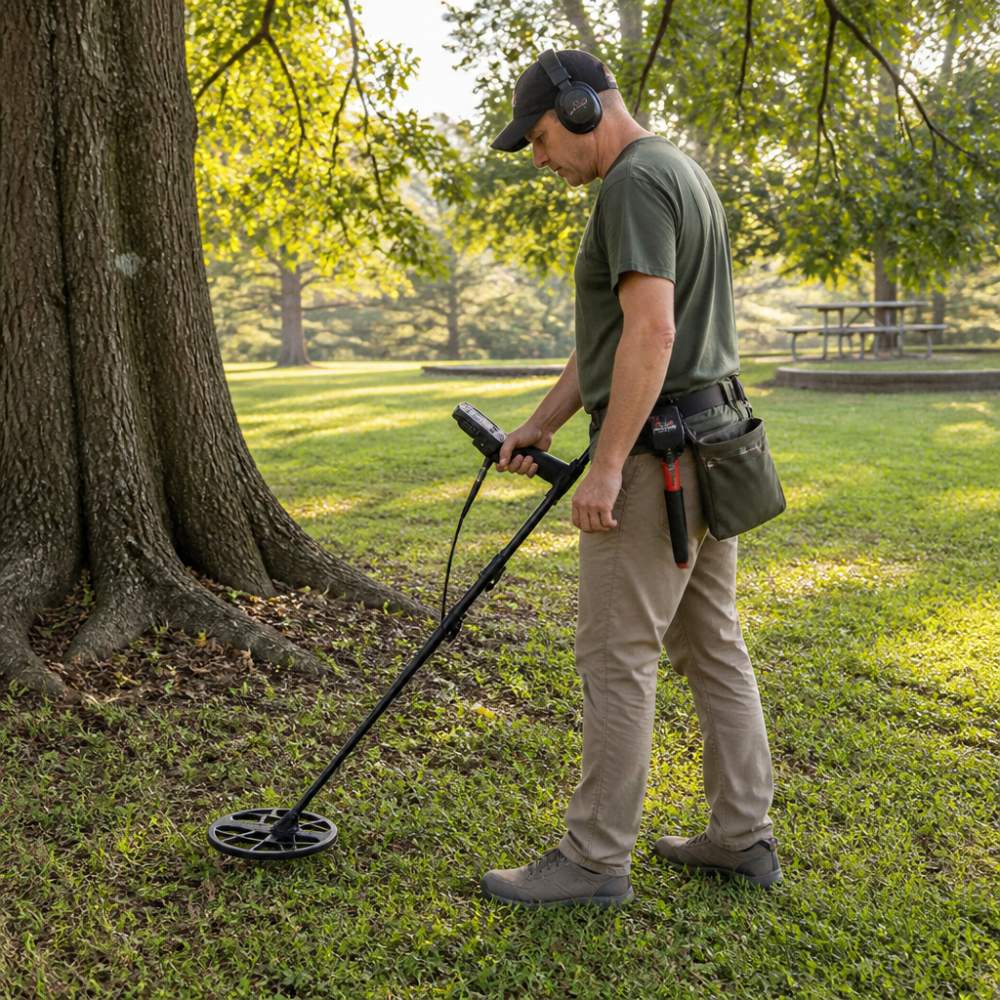
The highest concentrations of old silver coins appear where people historically gathered, waited, or transacted. Benches, old concession stand footprints, and areas around former restroom buildings are productive. So are the paths between parking areas and main attractions, where coins fell from pockets during the walk.
Park edges and perimeters are consistently underworked. Most detectorists head straight for the center of a park. The fence lines, sidewalk borders, and areas just inside the park entrance see heavy pedestrian traffic and are often virgin ground because they look unimpressive.
Shaded gathering spots near pavilions and picnic shelters are also high-value. People sat, ate, and socialized in these areas for generations, and the soil beneath old picnic tables frequently holds coins from multiple eras.
Historical Landmarks, Old Trees, and Virgin Ground
Old trees are one of the most reliable location signals in coin shooting. A mature oak or elm that was already large in the 1920s and 1930s provided shade, and people gathered beneath it. The ground around the drip line of old trees often holds coins from multiple eras.
Historical landmarks, bandstands, and old fountain bases are similarly productive. These were focal points for community events where crowds gathered and coins were dropped.
Virgin ground is any area that hasn't been worked by other detectorists. Areas that were fenced off for years, sections behind maintained hedgerows, or spots near recently removed structures are often untouched.
Digital Mapping and Historical Research Before You Dig
Showing up without research is the single biggest mistake in park detecting. The detectorists who consistently find silver coins do significant preparation before they ever leave home.
Start with historical aerial photography. The USGS Earth Explorer archive holds aerial imagery going back to the 1930s for many areas. Compare historical images against current satellite views to identify where old structures, pathways, and gathering areas existed that are no longer visible on the ground.
Sanborn fire insurance maps are another essential resource. These detailed urban maps document building footprints with precision. Many public libraries provide access to digitized Sanborn maps, and they're invaluable for locating old park buildings and concession areas.
Local historical societies and newspaper archives round out the research. Search for old photographs of the park on community history websites and digitized newspaper archives. Images showing crowds at specific locations tell you exactly where to focus your search.
The Library of Congress digital collections holds thousands of historical photographs and maps that are searchable by location and is free to use.
Once you've identified target zones, plot them on a current satellite map before your hunt. This turns a casual outing into a structured search with measurable results.
How to Read Metal Detector Signals for Silver
Reading metal detector signals for silver accurately is a skill that separates productive detectorists from those who dig every target. Silver coins produce a specific audio and visual response that, once learned, becomes recognizable even in heavily hunted ground.
Silver is a highly conductive, non-ferrous metal. On most modern detectors, silver coins register at the high end of the target ID scale, typically in the 90s on a 0-99 system. The audio response is a clear, high-pitched tone with a consistent, repeatable signal. Repeatability is key: a genuine silver coin gives the same reading from multiple sweep angles.
Training Your Ears to High Tones
Most detectorists spend too much time watching the screen and not enough time listening. High tones are your primary indicator for silver, copper, and other conductive targets. Before hunting a new park, spend 15 minutes at home with a known silver coin buried at various depths in a test garden. Sweep it repeatedly at different angles, speeds, and heights. Then bury a bottle cap and train yourself to hear the difference.
Ground balance affects your audio response significantly. Soil mineralization varies across park environments. Set your ground balance before each hunt, especially after moving to a new area of the park.
Advanced Signal Analysis for Modern Trash
Parks accumulate decades of modern trash alongside old coins. Pull tabs, aluminum foil, bottle caps, and modern zinc pennies all produce signals that can mask or mimic silver. Iron masking is a real problem in old parks, where iron targets like old nails can suppress signals from adjacent non-ferrous targets.
If your discrimination settings are too aggressive, you'll miss silver coins sitting next to iron. A better approach is to run lower discrimination and use your target ID to make dig-or-skip decisions rather than relying on discrimination to filter targets automatically.
Multi-frequency detectors handle iron masking better than single-frequency models. The ability to process multiple frequencies simultaneously gives a more accurate target ID in mineralized soil and near iron.
Metal Detector Settings for Deep Silver Coin Targets
Deep targets require specific settings adjustments. Silver coins at depth produce weaker signals, and the wrong settings will cause you to walk over them entirely.
| Setting | Recommended Approach | Why It Matters |
|---|---|---|
| Sensitivity | High, adjusted for ground noise | Increases depth perception for faint signals |
| Ground Balance | Manual or auto-track, tuned to local soil | Reduces false signals from soil mineralization |
| Discrimination | Low (accept iron range) | Prevents iron masking of adjacent silver |
| Target ID | Rely on ID, not discrimination filter | More accurate dig/skip decisions |
| Coil Size | Larger coil for depth, smaller for separation | Larger coils detect deeper; smaller coils separate targets in trash |
Sensitivity is the most important setting for deep silver. Run it as high as the ground conditions allow without producing excessive chatter.
Pinpointing accurately at depth is where many detectorists lose coins they've already found. Use a dedicated pinpointer like the Minelab Pro-Find 40 to locate the exact position of a deep target before cutting your plug. At $149, it pays for itself the first time it saves you from destroying a coin during recovery.

Best Entry Level Metal Detector for Coin Shooting
The best entry level metal detector for coin shooting in parks is one that offers reliable target ID, adequate depth for old silver coins, and manageable settings for a new user.
For a new coin shooter, the Minelab Equinox 900 at $999 is the strongest value in the mid-range category. It runs Minelab's Multi-IQ simultaneous multi-frequency technology, which gives it the target ID accuracy and depth that single-frequency entry-level detectors can't match. The 119-point high-resolution target ID system lets you read silver coins with precision even in trashy park environments. It also comes with two coils, which covers both open ground hunting and tighter, more cluttered areas.

For detectorists ready to invest in a detector they won't outgrow, the Minelab Manticore at $1,499 represents a significant step up in signal analysis capability. The Manticore's Multi-IQ+ technology and two-dimensional target ID display give experienced and developing detectorists more information per signal, which translates directly to better dig decisions in iron-heavy park environments.

Both detectors are available through Treasure Coast Detectors, a trusted Google Top Tier Store with support before and after your purchase to help you get the most from your equipment.
Metal Detecting Laws for Public Parks in 2026
Metal detecting laws for public parks vary significantly by jurisdiction and park type. Getting this wrong can result in confiscation of your equipment and fines.
The most important distinction is between federal, state, and local park systems. Federal land is governed by the Archaeological Resources Protection Act, which prohibits the removal of archaeological resources from federal lands without a permit. National parks and federally managed recreation areas are generally off-limits for metal detecting.
State parks operate under individual state regulations. Many states allow metal detecting in designated areas or require a permit. Check directly with the state park authority for the specific park you plan to hunt before visiting.
Municipal and county parks are where most coin shooting happens, and these are governed by local ordinances. Many city parks allow metal detecting with conditions, including:
- No digging deeper than a specified depth
- Mandatory hole filling and turf restoration
- Restrictions on removing items of historical or archaeological significance
- Permits required in some municipalities
The practical step: call the parks department for your target park before your first visit. Ask specifically whether metal detecting is permitted, whether a permit is required, and whether there are any restricted zones within the park.
Target Recovery and Post-Recovery Etiquette
Target recovery technique is where good detectorists separate themselves from hobbyists who get the hobby banned from parks. Sloppy recovery damages turf, creates complaints, and leads to parks restricting or prohibiting metal detecting for everyone.
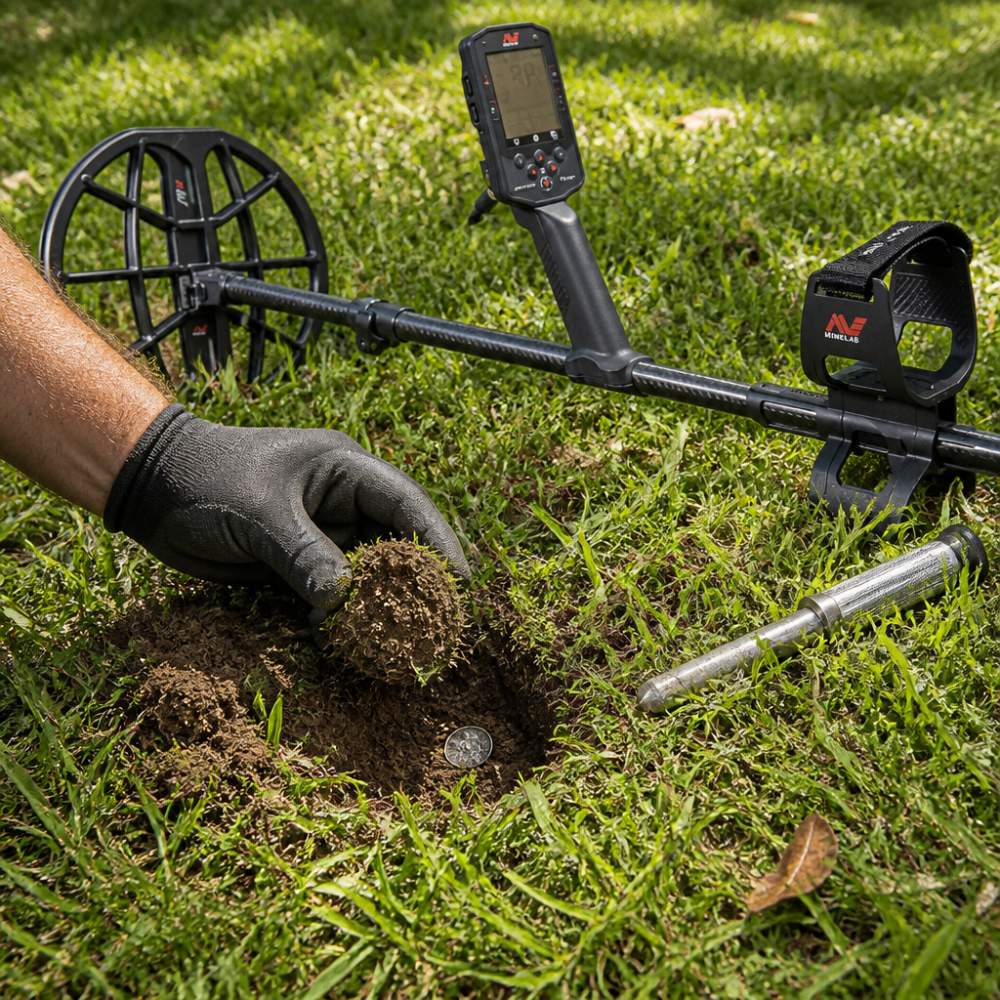
The standard technique for park coin shooting is the plug method. Cut a neat, circular or horseshoe-shaped plug using a quality digging tool. Fold the plug back without breaking it, recover the target, then replace the plug and press it firmly back into place. Done correctly, the hole is nearly invisible within days.
A few recovery rules that matter:
- Never dig a target without pinpointing it first.
- Keep plugs intact.
- Fill every hole, every time.
- Pack out all trash you dig.
- If a park ranger or staff member approaches, be friendly and transparent.
Post-recovery etiquette extends to how you present yourself in the park. Avoid hunting during peak hours when families are using the space. Early mornings on weekdays are ideal.
A quality pouch like the DetectorPro Gray Ghost Catch-All Pouch keeps your finds organized and your trash separate. At $34.95, it's a small investment that makes every hunt cleaner and more organized.
Coin shooting in public parks for old silver is one of the most rewarding forms of metal detecting, and it's also one of the most competitive. The parks that haven't been thoroughly worked are getting harder to find, which means technique, research, and equipment quality matter more than ever. Treasure Coast Detectors carries the Minelab Equinox 900 and Manticore, both of which give you the multi-frequency signal analysis and target ID accuracy that old silver in mineralized park soil demands. Get started with Treasure Coast Detectors and put the right equipment in your hands before your next hunt.
Frequently Asked Questions
Q: Is it legal to use a metal detector in public parks?
A: Legality depends on who manages the park. City and county parks typically allow metal detecting under local ordinances, though some require a permit. State parks often prohibit it or restrict it to specific zones. National parks ban metal detecting entirely under the Archaeological Resources Protection Act (ARPA). Always check with the managing agency before you hunt. Many parks post their rules on official websites, or you can call the parks department directly to confirm current regulations.
Q: What are the best settings for finding silver coins in parks?
A: For silver coins, set discrimination to reject iron and most low-conductivity targets while keeping non-ferrous signals open. Silver registers as a high-conductivity target, typically appearing in the upper range of your target ID scale. Lower sensitivity slightly in heavily mineralized soil to reduce false signals. Multi-frequency detectors handle variable soil conditions better than single-frequency models. A ground balance adjusted to local soil mineralization will also improve depth perception and give you cleaner audio response on deep targets.
Q: Where are you most likely to find old coins in a park?
A: The most productive spots are areas with historically high pedestrian traffic: old picnic areas, benches, pavilions, and paths between popular features. Park perimeters and edges near entrances often hold surface finds that other hunters overlook. Ground near old trees, historical monuments, and former gathering spots tends to hold pre-1965 silver coins because those locations were active before modern development. Historical maps can confirm where structures or gathering areas existed decades ago, pointing you to virgin ground other detectorists have missed.
Q: How do I identify silver coins while metal detecting?
A: Silver coins produce a strong, consistent high tone and a stable target ID in the upper-conductivity range on most modern detectors. Unlike pull tabs, which give a broken or variable signal, a silver dime or quarter typically locks in cleanly from multiple swing angles. If the signal sounds the same whether you approach from north-south or east-west, that consistency strongly suggests a non-ferrous conductive target like silver. Pinpointing the exact location before digging helps confirm depth and target size, reducing the chance of misidentifying iron masking a junk target.
This article was written using GrandRanker
Leave a comment