

How to Find Gold Rings in Shallow Water
Table of Contents
- What You'll Need Before You Start
- Choosing the Best Waterproof Metal Detector for Shallow Water Hunting
- Understanding VDI Numbers and Target Identification For Multi-Frequency
- How to Find Gold Rings in Shallow Water: Step-by-Step Search Technique
- Selecting the Right Metal Detecting Sand Scoop
- Beach Metal Detecting Tips for Beginners
- Equipment Maintenance and Post-Recovery Jewelry Care
- Legal and Ethical Considerations
- Frequently Asked Questions
What You'll Need Before You Start
Before hunting shallow water with a metal detector, you need the right gear. A waterproof metal detector designed for beach hunting is non-negotiable, along with a reliable sand scoop, a pinpointer for precise location work, and headphones to hear faint signals. Bring a finds pouch or mesh bag, water shoes with good grip, and a tide chart if hunting near tidal zones. A small brush or soft cloth prevents saltwater corrosion damage immediately after recovery.
Choosing the Best Waterproof Metal Detector for Shallow Water Hunting
Finding the right waterproof metal detector for shallow water determines everything else. You need a detector built specifically for saltwater environments. The Minelab Excalibur II is the professional standard, fully waterproof to 200 feet and using multi-frequency technology that cuts through saltwater interference better than single-frequency competitors.
Saltwater is conductive, creating electromagnetic noise that confuses single-frequency detectors and causes them to lose depth and generate false signals. Multi-frequency systems transmit across a range of frequencies simultaneously, analyzing which frequencies return clean signals. The Excalibur II uses Minelab's BBS (Broadband Spectrum) technology, which maintains depth and accuracy in conditions where simpler detectors fail.
The Excalibur II costs $1,699.00, a significant barrier for hobbyists. If you're hunting in freshwater beaches or dry sand mostly, a less expensive waterproof detector might serve you fine. But if saltwater is in your future, the Excalibur II's depth and discrimination will save you from wasting hours on false signals. Treasure Coast Detectors carries this detector and can explain whether the investment makes sense for your situation.
Evaluate ground balance adjustment across any waterproof detector. Mineralized soil and saltwater create ground noise that masks target signals. Manual ground balance lets you tune out that noise in real time, providing better precision than automatic ground balance in extreme conditions.
Understanding VDI Numbers and Target Identification For Multi-Frequency
Each metal detector brand will have their own set of VDI numbers to classify detected targets. Each brand of Detectors have their own VDI range. Gold rings typically register in the 70-85 VDI range on some detectors but this will change depending on the make of the detector. VDI numbers overlap with trash metals like aluminum foil. Discrimination settings reject targets below a certain VDI threshold, filtering out unwanted items before you dig.
The same target produces slightly different readings depending on its angle, depth, and soil composition. A gold ring at 3 inches deep might read 78 VDI, but at 8 inches might read 72. Experienced hunters listen to the audio signal and feel the detector's response rather than relying on VDI alone. A clean, repeating signal that reads consistently across multiple sweep directions is far more reliable than a single VDI number.
Overly aggressive discrimination causes you to miss targets entirely. The sweet spot for shallow water hunting is typically 50-65 VDI discrimination, eliminating most obvious trash while keeping sensitivity high enough to detect smaller gold items. Adjust based on what you find: if digging too much trash, tighten discrimination; if missing targets, loosen it.
|
VDI Range |
Typical Targets |
Action |
|---|---|---|
|
0-30 |
Iron, ferrous trash |
Reject with discrimination |
|
30-60 |
Aluminum, pull-tabs, some copper |
Evaluate signal quality |
|
60-85 |
Gold, silver, some non-ferrous metals |
Dig all signals in this range |
|
85+ |
Large silver, copper, lead |
Dig all signals, Dig it all |
How to Find Gold Rings in Shallow Water: Step-by-Step Search Technique
Select a location with known jewelry loss, areas near lifeguard stations, popular swimming spots, or where people gather in the water. Scout at low tide to understand bottom terrain and identify potential target zones.
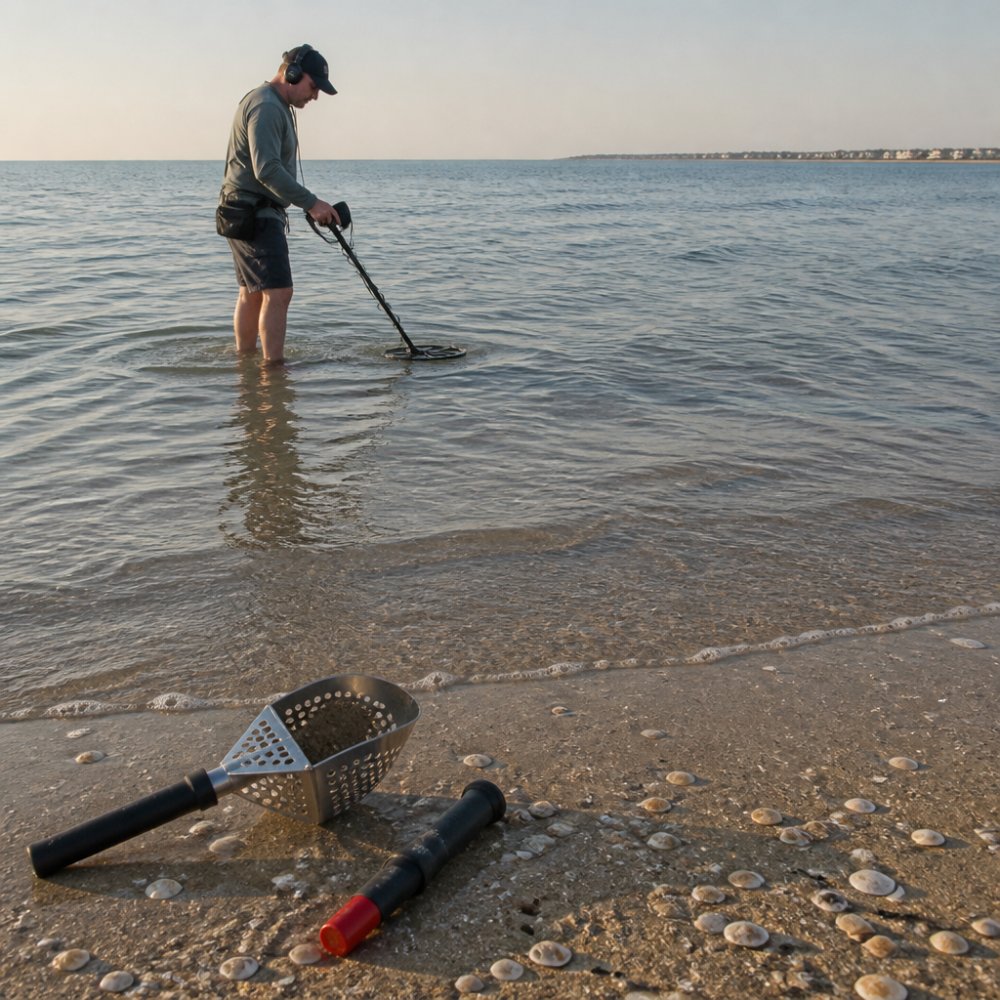
Begin in water depth of 1-3 feet, where most jewelry loss occurs. Set your detector to all-metal mode initially for maximum sensitivity. Sweep your search coil in a controlled side-to-side pattern, overlapping each pass by about 6 inches. Move slowly and maintain consistent coil height just above the sand, never allowing it to dig into the substrate.
When you detect a signal, stop and sweep slowly over the area again to confirm it's real and repeatable. Once confirmed. Make sure you have a good stainelss steel or titanium sand scoop with a carbon fiber shaft like the CKG brand or Motley sand scoop. This will ensure you dig your target in one or two scoops. There are times that this will take you more than several tries to dig that target.

Reading Tide Charts and Water Conditions
Tide charts are your operational schedule. Download a chart for your specific location, as tide timing varies by geography. Low tide exposes more beach and shallower water, giving access to areas normally underwater. High tide floods areas normally exposed, and this is where many rings end up as people wade deeper.
Slack water, the period between tidal changes when current is minimal, is often the sweet spot. You get reasonable water depth, manageable current, and enough exposed beach to work systematically. Check your tide chart 2-3 days before hunting and plan your trip around slack water windows. An hour of focused hunting during slack water often produces better results than three hours fighting strong current.
Rough seas churn up sand and create turbidity that can reduce detection depth slightly. Calm, clear water is ideal, but don't skip hunting just because water is rough. Many hunters avoid rough conditions, meaning less competition for that productive area.
Mastering Search Patterns and Grid Coverage
Random sweeping wastes time. Systematic grid coverage ensures you hunt every square foot of your target area without gaps or overlaps. Divide your hunting zone into lanes running parallel to shore. Work one lane at a time, making parallel passes that overlap slightly. This back-and-forth pattern ensures complete coverage and prevents missing productive areas.
Document your passes mentally or with temporary flags. When you find a target, note its location relative to your grid. Over time, you'll see patterns in where rings cluster and can adjust future hunts to focus on high-probability zones.
Handling Saltwater Interference and Mineralization
Saltwater creates conductive interference that older detectors cannot overcome. Salt ions conduct electricity, generating ground noise that masks target signals. Mineralization in wet sand compounds the problem. Manual ground balance tunes out noise created by surrounding soil and water, allowing the detector to focus on actual metal targets.
To set ground balance, hold your coil just above the sand without any metal targets nearby and activate your detector's ground balance function. The detector analyzes the electromagnetic response and adjusts accordingly. If you're still getting excessive false signals, reduce sensitivity slightly. High sensitivity increases detection depth but also increases false signals in highly mineralized conditions.
Selecting the Right Metal Detecting Sand Scoop
Your sand scoop determines whether you extract targets successfully or damage them. The ideal scoop balances drainage efficiency with target retention. The [T-Rex Sand Scoops(/products/t-rex-sand-scoops-three-sizes) | treasurecoastmetaldetectors.com] are engineered for this balance, available in three sizes with a honeycomb design that lets sand fall through while keeping targets secure. The 8-inch size is most versatile for shallow water hunting.
Stainless steel construction is critical in saltwater environments. Regular steel rusts rapidly in salt water, while stainless steel resists corrosion and maintains integrity season after season. The T-Rex scoops use high-quality stainless steel. These tools are refined through decades of field use.
The alternative is the CKG Stainless Steel Sand Scoop, measuring 11x8 inches with a carbon fiber handle. The larger size covers more area per scoop, reducing total digging effort. At $195.00, it's a premium option justified by weight savings and durability for frequent hunters.
Honeycomb design is superior to solid scoops with large holes. Honeycomb creates turbulence as sand drains, helping shake loose targets to the bottom where you can retrieve them.
Beach Metal Detecting Tips for Beginners
Hunt near high-traffic areas where people actually lose jewelry. Beaches near parking lots, lifeguard stations, and swimming areas produce more targets than remote stretches. Research your location before hunting, talk to local metal detecting clubs, check online forums, and ask lifeguards where they've found lost items.
Invest in a detector rated for saltwater from the start. Trying to hunt saltwater beaches with a freshwater detector causes you to miss targets constantly. Treasure Coast Detectors specializes in helping beginners choose the right detector for their environment.
Practice your technique in dry sand or shallow water before serious hunting. Get comfortable with your coil sweep speed, grid pattern, and how your detector sounds in that specific environment. Spending an hour learning your detector's behavior in your target area is worth more than reading guides online.
Join a local metal detecting club or forum. Experienced hunters know which beaches produce jewelry, what seasons are best, and what techniques work in your region. The metal detecting community is generally generous with knowledge.
Manage your expectations about finds. A productive beach hunt might yield one or two targets per hour, and not all will be valuable. The real reward is the time outdoors, the problem-solving process, and the occasional genuine discovery.
Equipment Maintenance and Post-Recovery Jewelry Care
After each hunt, rinse your detector with fresh water, especially the coil, control box, and connectors. Saltwater deposits crystallize as they dry, corroding metal and degrading connections. A quick rinse takes two minutes and extends your detector's lifespan significantly.
Dry your detector thoroughly before storing it. Moisture trapped in the control box causes internal corrosion. Use a soft cloth to dry external surfaces and leave the detector in a dry environment for at least an hour before storing.
Your sand scoop and pinpointer need the same treatment. Rinse them with fresh water after each hunt, dry completely, and inspect for rust or corrosion.

Rinse recovered gold rings gently with fresh water and use a soft brush to remove debris. Never use harsh scrubbing or abrasive materials. Once clean and dry, inspect for damage. If the ring appears damaged, have it professionally evaluated before wearing it. Store recovered items in a dry environment to prevent further corrosion.
Legal and Ethical Considerations
Metal detecting on public beaches is legal in most locations, but regulations vary by jurisdiction. Check with your local parks department or beach management office before hunting. Some beaches require permits, restrict metal detecting to certain hours or seasons, or prohibit it entirely.
Private beaches are off-limits without explicit permission from the owner. When in doubt, ask. Property owners are often willing to grant permission if you ask respectfully.
Ethical metal detecting means leaving the beach in better condition than you found it. Fill your holes completely, pack out all trash, and never leave debris scattered. Responsible hunting protects access for future hunters.
If you find jewelry with identifying information, make a genuine effort to return it to the owner. Post about the find on local community pages, contact local police, or take it to a local jeweler. The value of returning someone's meaningful jewelry far exceeds any monetary worth.
The National Parks Service prohibits metal detecting in national parks and protected areas. State parks have varying regulations, so check before hunting.
Finding gold rings in shallow water combines equipment knowledge, technique, and patience. You need a waterproof metal detector built for saltwater, the right sand scoop and pinpointer, and an understanding of how tide, mineralization, and VDI numbers work together. Treasure Coast Detectors carries the professional-grade detectors and accessories you need, including the Minelab Excalibur II and T-Rex sand scoops that serious hunters rely on. Start with a single productive location, master your technique there, and expand once you understand how your detector behaves in saltwater environments.
Frequently Asked Questions
What is the best metal detector for shallow water hunting?
The Minelab Excalibur II is purpose-built for shallow water and beach hunting. It's fully waterproof to 200 feet, uses multi-frequency technology to handle saltwater interference, and delivers excellent depth penetration even in mineralized soil. For beginners, it's a solid investment that won't lose signal in wet sand or salt conditions where cheaper detectors fail.
How do I distinguish gold signals from trash in shallow water?
Learn your detector's VDI number scale. Gold rings typically register in the 70-85 range on most detectors, while bottle caps and aluminum foil appear lower. Use ground balance adjustment to filter out mineralization noise. The brand and detector's tone choice along with the VDI numbers will give you a clue but it is not always gold. It could be foil or an encrusted coin that gives you a false number. You are always learning each day in this hobby. My personal favorite detectors over the years have been the Excalibur II and Excalibur 1000. The Equinox series has also been a favorite along with the XP Deus II. Having said that best detector I have ever used is the Minelab Manticore detector hands down.
Is it better to hunt at low tide or high tide for gold rings?
Low tide exposes more beach area and allows access to the hard pan layer where rings often settle after sand movement. Check tide charts before each trip. High tide can push rings deeper into sand, but it also moves material around, creating new recovery opportunities. Many hunters work both conditions to understand how tides and currents affect target distribution in their area. For me tides don't matter. I hunt in the water and either go out with the tide or come in close with it. Targets on the beach are out there as far as you can go.
What accessories do I need for shallow water metal detecting?
A quality sand scoop like the T-Rex or CKG stainless steel models is essential for efficient recovery without damaging targets. A pinpointer narrows down exact target location. Waterproof gloves, a finds pouch, and a small notebook help you track patterns. For deeper water work, buoyancy control and scuba gear become necessary, but shallow water hunting primarily requires a good scoop and pinpointer.
Leave a comment