

Discriminating Trash from Treasure Effectively
Table of Contents
- What Separates Trash from Treasure in Metal Detecting
- Metal Detector Target ID Guide: Reading Numbers and Tones
- How to Identify Iron Signals Before You Dig
- How to Stop Metal Detector False Signals in Mineralized Soil
- A Decision-Making Framework for Discriminating Trash from Treasure
- Safety and Health Protocols When Sorting Discarded Materials
- Digital and Data Decluttering: Applying Sorting Logic Beyond the Field
- Choosing the Right Detector for Better Discrimination
Last Updated: August 25, 2026
What Separates Trash from Treasure in Metal Detecting
Discriminating trash from treasure is the single skill that separates frustrated beginners from productive detectorists. Discrimination is the detector's ability to distinguish between target types based on their electrical conductivity and ferrous properties. The goal is to filter out low-value discarded materials while preserving signals from targets with genuine market value, functional utility, or historical significance.
Conductive vs. Ferrous Targets: The Core Distinction
Targets fall into two broad categories: ferrous and non-ferrous. Ferrous metals contain iron and are magnetic. Non-ferrous metals, including copper, silver, gold, and aluminum, are not magnetic. However, not all non-ferrous targets are treasure, aluminum pull tabs and gold rings share similar conductivity ranges, which is why discrimination alone can't replace good judgment. Understanding the full value chain of a target, including its sentimental value, market value, and functional utility, is what separates a thoughtful detectorist from someone just chasing tones.
Sentimental, Market, and Functional Value: Sorting Criteria That Matter
A useful sorting framework considers three dimensions before you decide whether to dig. Market value covers coins, silver, and jewelry with clear resale potential. Functional utility applies to items that still work, like old tools or hardware. Sentimental value is harder to quantify but matters in community reuse and historical contexts. Applying these sorting criteria before you swing the coil is what makes discriminating trash from treasure effectively a discipline rather than a guess.
Metal Detector Target ID Guide: Reading Numbers and Tones
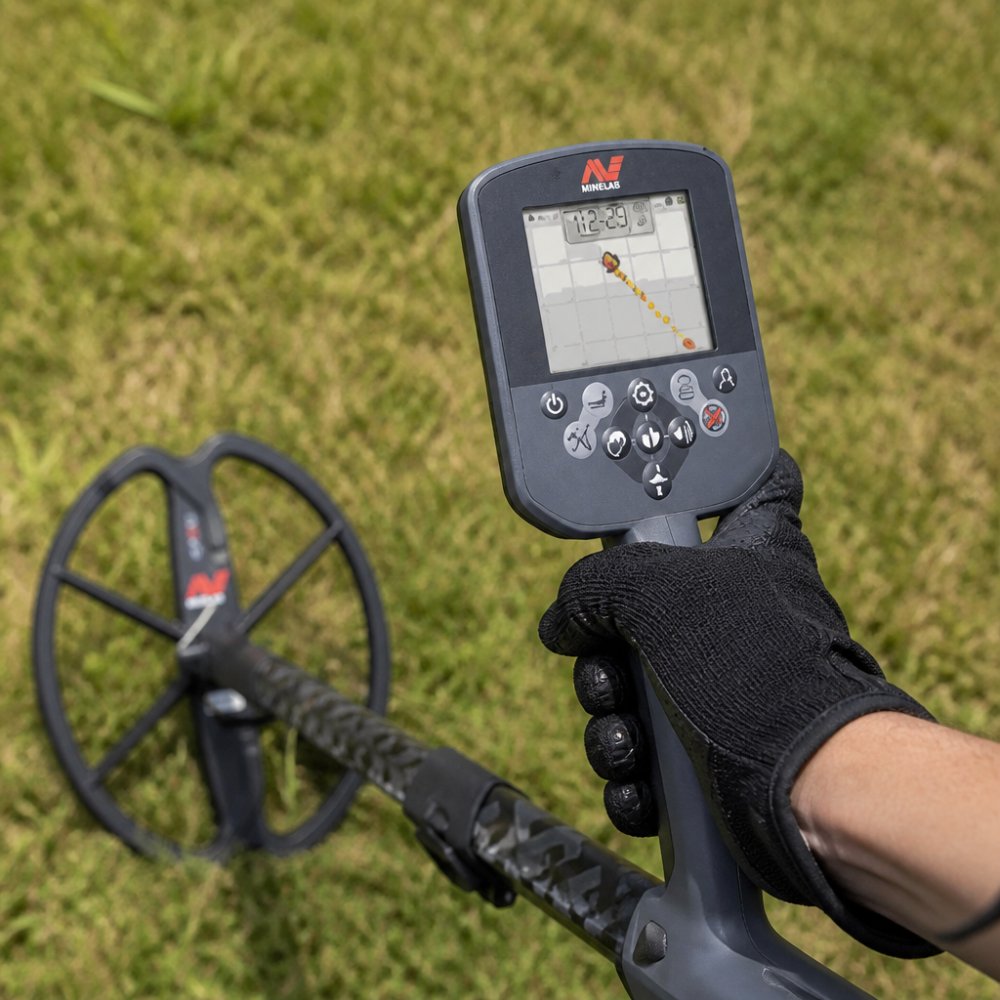
Target identification numbers, commonly called VDI numbers, are the detector's numerical estimate of a target's conductivity. Most modern detectors display a VDI scale from roughly 0 to 99 (peer-reviewed research). Low numbers indicate ferrous or low-conductivity targets. High numbers point toward high-conductivity non-ferrous metals like silver.
VDI Number Ranges for Common Targets
Here's a practical target ID guide based on commonly observed VDI behavior across standard single-frequency detectors. Exact numbers shift between machines, so treat these as starting ranges, not absolutes.
| Target Type | Typical VDI Range | Ferrous? | Dig Decision |
|---|---|---|---|
| Iron nails, bolts | 0 - 15 | Yes | Usually skip |
| Aluminum foil | 10 - 30 | No | Skip |
| Pull tabs | 65 - 75 | No | Context-dependent |
| Gold rings (small) | 30 - 55 | No | Dig |
| Nickels | 55 - 65 | No | Dig |
| Pennies (clad) | 80 - 87 | No | Dig |
| Dimes, quarters | 88 - 95 | No | Dig |
| Silver coins, relics | 90 - 99 | No | Dig |
The pull tab overlap with gold rings is the most frustrating reality in the hobby. No discrimination setting eliminates it cleanly. That's where audio tones add a second layer of information.
Audio Tones as a Second Layer of Discrimination
Most detectors assign different audio tones to different VDI ranges. A low grunt or broken tone typically signals iron or heavily corroded material. A mid-tone often covers the pull tab and gold zone. A clear, repeating high tone points toward silver or copper. A target that gives a consistent tone from multiple sweep angles is more likely to be a solid, symmetrical object like a coin. A tone that breaks up, warbles, or changes pitch as you sweep is behaving like iron or jagged waste.
How to Identify Iron Signals Before You Dig
Identifying iron signals before you dig saves more time than any other skill in this hobby. Iron is the dominant form of solid waste at most historical sites, and digging every iron signal makes productive hunting impossible.
The Two-Way Sweep Test
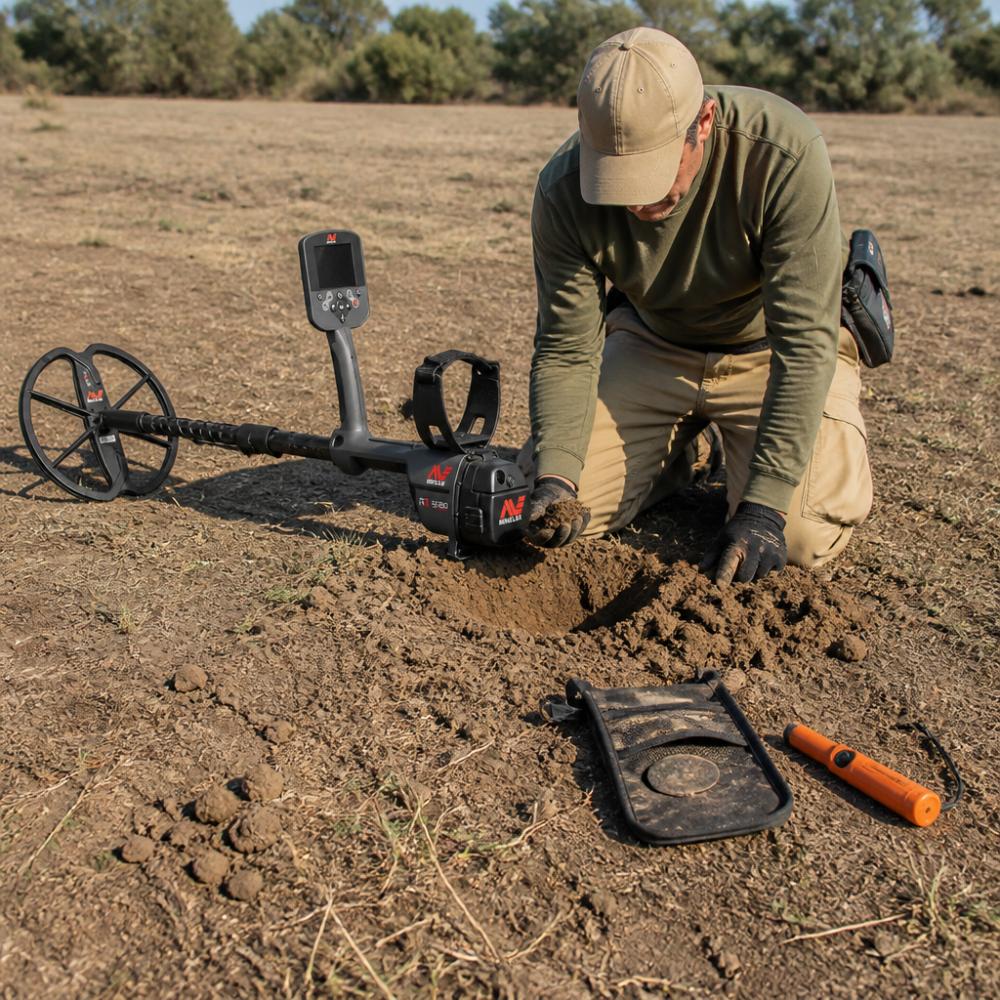
The two-way sweep test is the most reliable field method for identifying iron signals before committing to a dig. Sweep the target along one axis, then rotate 90 degrees and sweep again. A non-ferrous target like a coin will read consistently from both directions. An iron target, especially a nail, will often jump VDI numbers dramatically or go silent on one axis because of its elongated shape. This asymmetry is the tell.
Grunt, Falsing, and the Iron Halo Effect
Three iron-specific behaviors trip up beginners repeatedly. Grunting is a low, broken audio response that iron produces as the coil passes over it. Some detectors have a dedicated iron grunt audio mode. Falsing happens when a large iron object produces a brief non-ferrous signal at the edge of the coil's detection field. The fix is to narrow your discrimination settings slightly and approach suspected iron from multiple angles. The iron halo effect occurs when iron corrodes in soil and releases iron oxides that spread outward, masking nearby non-ferrous targets or causing erratic readings. If you're hunting a site known for heavy iron contamination, slow down and pay attention to any signal that seems inconsistent.
How to Stop Metal Detector False Signals in Mineralized Soil
Mineralized soil is the most common cause of false signals for detectorists who hunt outside manicured parks. Ground mineralization refers to the concentration of iron minerals, salt, and other conductive compounds in the soil matrix (usgs.gov). These minerals respond to the detector's field and produce signals that mimic real targets.
Ground Balancing for High-Mineralization Sites
Ground balancing is the process of calibrating the detector to ignore the mineral response of the soil at a specific site. Most mid-range and advanced detectors offer manual, automatic, or tracking ground balance.
- Manual ground balance gives you precise control. Pump the coil over a clean patch of ground and adjust until the threshold tone stays steady. This is the most accurate method for highly variable soils.
- Auto ground balance sets the balance point with a button press. It's faster but less precise on sites where mineralization varies sharply across short distances.
- Tracking ground balance continuously adjusts as you move. It's useful for sites with inconsistent soil but can occasionally track onto a real target and suppress it.
Sensitivity, Frequency, and Coil Selection
Beyond ground balance, three settings directly affect how to stop metal detector false signals in difficult ground. Sensitivity controls how deep and aggressively the detector responds to targets. Reduce sensitivity in small increments until false signals quiet down while target signals remain. Operating frequency determines what the detector sees most clearly. Lower frequencies penetrate deeper and handle mineralized soil better (peer-reviewed research). Higher frequencies are more sensitive to small, low-conductivity targets like fine gold. Multi-frequency detectors like the Minelab Manticore handle this automatically by transmitting multiple frequencies simultaneously. Coil size is often overlooked. A smaller coil has less surface area interacting with mineralized ground, reducing false signals. For heavily mineralized sites, dropping from a standard 11-inch coil to a smaller 7- or 8-inch coil often clears up the signal picture considerably.

A Decision-Making Framework for Discriminating Trash from Treasure
Most guides tell you what the numbers mean. Few give you a repeatable process for making the dig decision under field conditions. Here's a framework that works.
Step 1: Read the VDI number. Is it in a known trash range for your site? If yes, move on unless the tone is unusually clean.
Step 2: Listen to the tone consistency. Sweep the target from at least two directions. Does the tone hold? Does the VDI stay stable? Inconsistency points to iron or junk.
Step 3: Apply the two-way sweep test. Rotate 90 degrees and sweep again. Confirmation from a second axis is your green light.
Step 4: Consider site context. A VDI of 70 in a colonial-era field is worth digging. The same number in a modern park near a picnic area is probably a pull tab.
Step 5: Make the call and record the result. Keep a mental or written log of what signals produce what targets at each site. Over time, you build a site-specific discrimination profile that no detector setting can replicate.
| Step | Action | Time Required |
|---|---|---|
| 1 | Read VDI number | 2 seconds |
| 2 | Assess tone consistency | 3-5 seconds |
| 3 | Two-way sweep test | 5-10 seconds |
| 4 | Apply site context | 2 seconds |
| 5 | Dig decision and log | 15-30 seconds |
Safety and Health Protocols When Sorting Discarded Materials
Digging in the ground means contact with discarded materials that can carry real health risks. Broken glass, corroded metals, and contaminated soil are common at old dump sites and urban fields. Practical field protocols include wearing cut-resistant gloves, using a dedicated finds pouch rather than pockets, avoiding sites with visible chemical contamination, washing hands before eating or drinking, and ensuring your tetanus vaccination is current.
Property rights are equally important. In most jurisdictions, the legal status of abandoned solid waste on public land is governed by state solid waste statutes and local ordinances. Always confirm land access before hunting, and understand that scavenging rules vary by municipality. Research your local regulations through your state's environmental agency before treating any discarded materials as your own.
Digital and Data Decluttering: Applying Sorting Logic Beyond the Field
The same logic that drives discriminating trash from treasure in the field applies directly to digital environments. Digital clutter accumulates gradually and invisibly, at a cost that only becomes obvious when performance degrades. Data decluttering follows the same sorting criteria as physical target identification: Does a file have functional utility? Does it have market value in actionable business intelligence? Is it taking up storage or processing capacity that should be reserved for high-value material?
A practical digital discrimination framework mirrors the field version: identify and tag files by last-access date, apply a two-pass review, establish discrimination settings as automated rules, and audit regularly. Archive rather than delete when in doubt, the same way a good detectorist bags questionable finds for later identification.
Choosing the Right Detector for Better Discrimination
Better discrimination starts with the right equipment. A detector with limited target ID resolution makes discriminating trash from treasure effectively much harder, regardless of operator skill.
For beginners who want real discrimination capability without steep investment, the Nokta Makro Simplex Ultra at $299 delivers fully waterproof performance with multiple discrimination modes and a clear target ID display.
Detectorists who hunt mineralized soil or saltwater beaches need multi-frequency capability. The Minelab Manticore at $1,499 handles both environments with simultaneous multi-frequency technology, directly addressing the false signal problem in difficult ground.
For advanced users, the Minelab CTX 3030 at $1,999 offers Smartfind 2 color discrimination and FBS 2 multi-frequency technology. The color discrimination display plots targets on a two-dimensional ferrous-conductivity grid, giving you far more information per signal than a single VDI number.

The XP Deus II at $1,699 takes a different approach with its Fast Multi-Frequency coil and fully wireless architecture. For detectorists who hunt varied terrain and want maximum target separation, the Deus II's simultaneous multi-frequency performance is among the best available.

A better detector forces you to develop better habits because it gives you more information to work with. That feedback loop accelerates skill development faster than any beginner machine can.
Sorting signals accurately takes practice and the right tools. If you're digging more trash than treasure, the problem is rarely effort. It's usually a combination of limited target ID resolution and inconsistent signal evaluation habits. Treasure Coast Detectors carries a curated selection of detectors from Minelab, Nokta, XP, and OKM available through the top tier google store, with support before and after your purchase to help you find the machine that matches your hunting style and soil conditions. Get started with Treasure Coast Detectors and start making better dig decisions from your first session.
Frequently Asked Questions
How do target ID numbers help in discriminating trash from treasure?
Target ID numbers, also called VDI (Visual Discrimination Indicator) numbers, reflect a target's conductivity and ferrous properties on a numeric scale. Low numbers typically indicate iron or foil; mid-range numbers often correspond to pull-tabs, nickels, or small gold; high numbers usually signal silver coins or copper. By learning the ID range for targets you want to find at your specific sites, you can decide whether a signal deserves a dig before breaking ground, saving significant time in trash-heavy areas.
Why does my metal detector give false signals on deep targets?
Deep targets produce weaker, more diffuse signals that the detector's circuitry can misread. Highly mineralized soil compounds this by generating its own electromagnetic interference. The result is an unstable or jumping target ID that mimics a real find. Lowering sensitivity slightly, re-running a ground balance, and slowing your sweep speed all help the detector process the signal more accurately before it reports a reading, reducing the frequency of false positives on deep targets.
What are the best settings for discriminating trash in high-mineralization soil?
Start with a thorough manual or automatic ground balance to cancel out soil minerals. Reduce sensitivity to the point where the detector runs quietly without chattering. Use a smaller coil if your model supports it, since smaller coils are less affected by ground minerals and produce tighter, more accurate target IDs. Multi-frequency detectors, such as the Minelab Manticore or CTX 3030, handle mineralized ground better than single-frequency models because they process multiple conductivity readings simultaneously.
How can I tell if a signal is a coin or a pull-tab?
Pull-tabs and small gold rings occupy a very similar VDI range, roughly 30-50 on most scales, which is why this is one of the toughest calls in the hobby. The best approach is to listen for signal consistency: coins tend to produce a repeatable, stable tone from multiple sweep angles, while pull-tabs often sound slightly different when you approach from a perpendicular direction. Checking the signal from two 90-degree angles before digging is a reliable field test that experienced detectorists use daily.
This article was written using GrandRanker
Leave a comment