

Finding Valuable Coins Metal Detecting: Legal & Financial Guide
Table of Contents
- What Happens When You Find a Valuable Coin Metal Detecting
- Metal Detecting Laws by State 2026
- Landowner Rights and Permission Before You Dig
- How to Appraise Rare Coins
- How to Clean Old Coins Found Metal Detecting
- Identifying Rare Dates and Mint Marks
- Documentation, Provenance, and Insurance for Valuable Finds
- Conclusion
Last Updated: August 27, 2026
What Happens When You Find a Valuable Coin Metal Detecting
Finding a valuable coin while metal detecting is thrilling, but what happens next determines whether you've stumbled onto genuine treasure or a costly legal problem. Your immediate actions, before leaving the site, set the stage for authentication, appraisal, profit, and legal compliance.
Resist the urge to clean aggressively or show the coin around indiscriminately. Your next steps involve understanding treasure trove laws, securing landowner permission, and documenting the find spot meticulously. Many detectorists skip these critical steps and end up unable to sell their finds or facing unexpected legal complications.
At Treasure Coast Detectors, we provide support before and after purchase to help you navigate questions about your finds and the legal landscape in your area.
Depending on where you detected and what you found, you might owe a percentage to the landowner, face restrictions on selling, or discover the find has historical significance requiring authority notification. Understanding these possibilities upfront protects your investment and keeps you legal.
Metal Detecting Laws by State 2026
Metal detecting laws by state 2026 vary dramatically. What's legal in one state might be restricted or prohibited in another. Before you swing a detector anywhere, know your jurisdiction's specific rules about treasure hunting, artifact removal, and precious metal recovery.
Most states allow metal detecting on private property with permission and on certain public lands, but many impose restrictions on what you can keep. Some classify valuable coins as cultural property requiring reporting or surrender. Others have treasure trove laws splitting ownership between finder and property owner.
Common restrictions across most states include: national parks and archaeological sites are off-limits, state parks often require permits, and public beaches may have specific prohibited zones. Private property is usually fair game with written permission, though some states require sharing proceeds with the landowner.
A critical distinction exists between public and private land finds. According to National Park Service guidelines on artifact collection, removing artifacts from federal lands without authorization is illegal, and valuable coins may be classified as archaeological artifacts depending on age and context.
State-specific variations matter enormously. Some states have abandoned property laws allowing finders to claim ownership after a certain period if the original owner cannot be identified. Others have strict treasure trove statutes automatically splitting proceeds. A few treat all valuable finds as state property. You cannot assume one state's rules apply to another.
Before detecting in a new location, research that state's Department of Natural Resources website or contact a local metal detecting club. Many clubs maintain current information about legal status and permitted areas. This due diligence takes an hour and can save thousands in legal fees or confiscated finds.
Landowner Rights and Permission Before You Dig
Landowner rights vary by state, but one principle is universal: you need written permission before detecting on someone else's property. A verbal agreement is insufficient if a dispute arises, and detecting without permission can result in trespassing charges and confiscation of your finds.
When securing permission, the agreement should specify what you're searching for, where on the property you can detect, and what happens if you find something valuable. A simple one-page document clarifies expectations and protects both parties.
The most common arrangement is a split: the landowner receives a percentage (typically 10-25%) of the sale price of valuable finds, while you keep the remainder. Some prefer a flat fee per day or month. Others are satisfied having someone maintain the property and remove trash metal. The key is reaching an explicit written agreement before you dig.
If you discover a valuable coin without prior permission, your options are limited. Attempting retroactive permission means the landowner now knows something valuable was found and may demand a larger share or claim full ownership. Securing permission in advance, ideally with a written agreement, is essential.
Many detectorists maintain relationships with landowners over years, returning seasonally to search new areas. These partnerships work because both parties understand the terms and have built trust. Start with a clear conversation about what you're looking for and what you'll do with valuable finds. Get it in writing.
How to Appraise Rare Coins
Appraising rare coins requires more than a quick online search. Professional grading and authentication determine whether your find is worth $50 or $5,000, and the difference hinges on condition, numismatic value, and provenance.
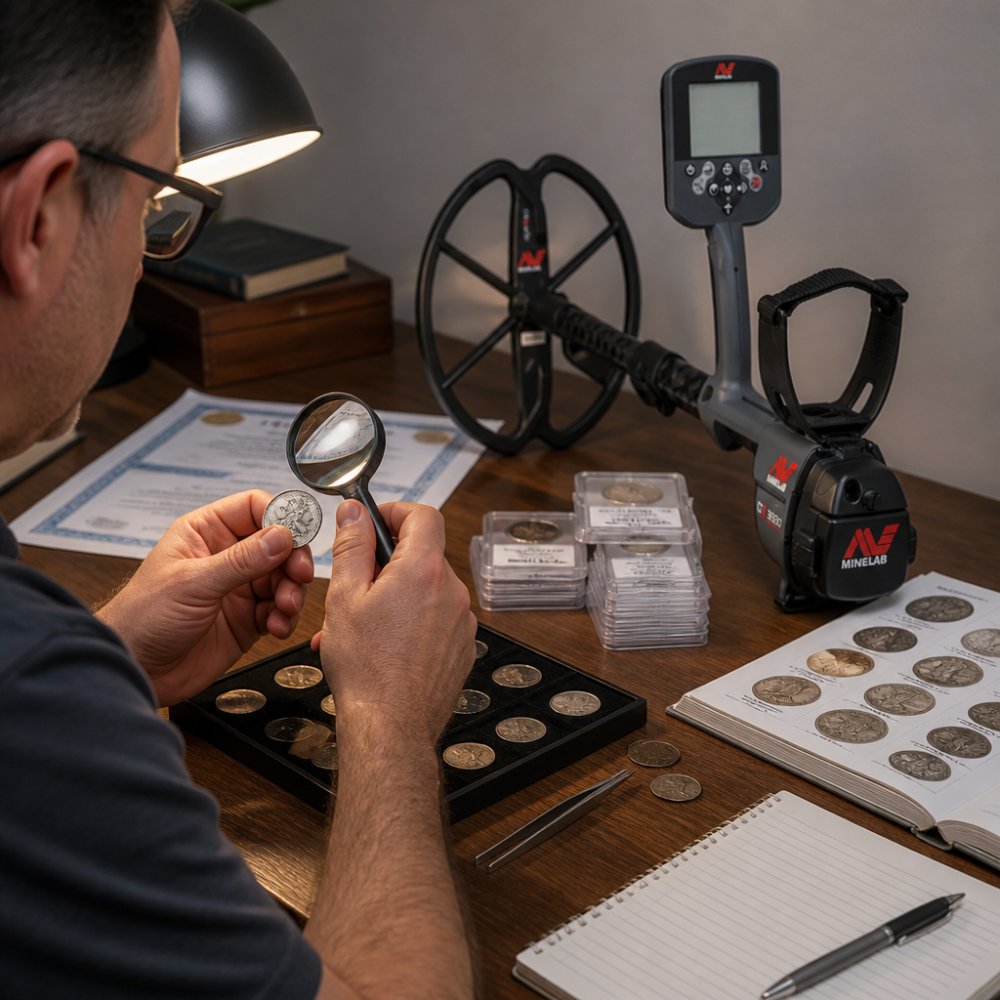
Determine whether your coin has numismatic value (collector appeal based on rarity, date, mint mark, and condition) or primarily bullion value (precious metal content). A common date in poor condition might be worth face value plus a small metal premium. A rare date in excellent condition can command 10 to 50 times that amount from collectors.
Condition is everything in numismatic grading. The Sheldon scale ranges from 1 (poor) to 70 (perfect mint state). Even small differences, a coin graded MS-65 versus MS-67, can mean thousands of dollars. Surface damage, corrosion, patina, and wear all affect the grade. Professional appraisal matters because a coin you think is excellent might grade lower due to microscopic marks invisible to the naked eye.
Find a certified professional appraiser or numismatic grading service. The Professional Numismatists Guild maintains a directory of qualified appraisers. Major grading services like PCGS and NGC authenticate and grade your coin for a fee (typically $20-100 depending on estimated value) (pcgs.com). They return the coin in a tamper-proof holder with a grade label, significantly increasing marketability and value.
Before submitting for professional grading, research comparable sales. Auction records, dealer price guides, and recent eBay sold listings show what similar coins have sold for. This gives you a baseline expectation and helps you decide if professional grading is worth the cost.
Documentation of your find spot, recovery method, and any conservation work adds to the coin's provenance. Professional appraisers want to know where the coin came from and how it's been handled. This information, combined with professional authentication, makes your coin significantly more appealing to collectors and dealers. collecting gold coins.
How to Clean Old Coins Found Metal Detecting
Cleaning old coins is a minefield. The wrong approach destroys numismatic value instantly, and many collectors reject cleaned coins regardless of rarity. Yet leaving a coin encrusted with dirt and corrosion also diminishes appeal and makes accurate grading impossible.
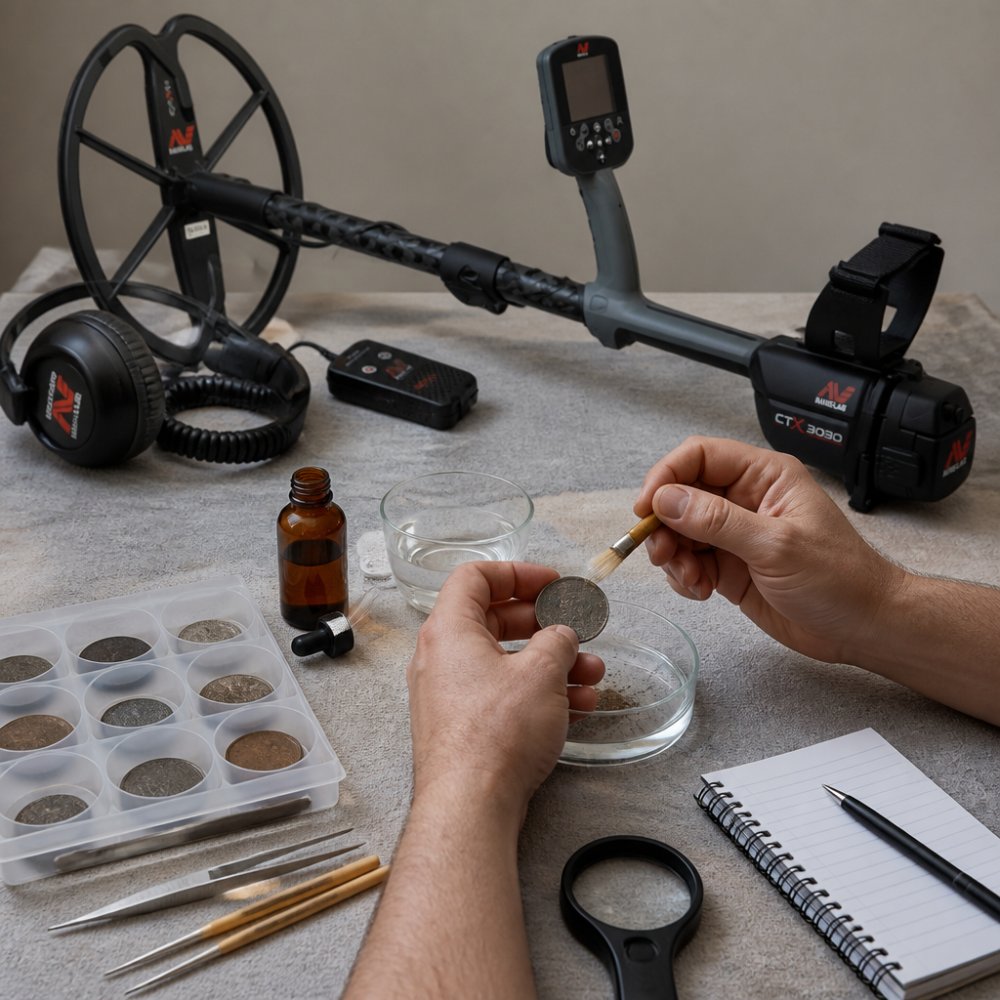
The cardinal rule: minimal intervention. Professional conservators use gentle methods that remove surface dirt without altering the coin's patina or original surface. Aggressive scrubbing, chemical dips, or polishing destroys the qualities that make a coin valuable to collectors.
Start with distilled water and a soft brush. Soak the coin in distilled water for 24 hours to soften stubborn soil. Use a soft-bristled toothbrush (never wire) to gently remove loosened dirt. Pat dry with a lint-free cloth. This removes most surface debris without damage.
For coins with heavy corrosion or encrustation, consider professional conservation. Attempting to remove deep corrosion yourself risks permanent damage. A professional conservator can assess whether corrosion can be safely removed or should remain as part of the coin's historical patina.
Never use commercial coin cleaners, vinegar, lemon juice, or acidic solutions. These damage the surface and leave visible marks reducing value. Never use electrolysis or advanced cleaning methods unless trained in numismatic conservation.
Many valuable coins are worth significantly more uncleaned than after amateur cleaning attempts. If uncertain, leave the coin as found and let professional appraisal determine whether cleaning is appropriate. An appraiser will advise on conservation needs before you take any action that might reduce value.
Identifying Rare Dates and Mint Marks
Not all old coins are valuable. A coin's date and mint mark determine whether it's common or rare, and rarity is the primary driver of numismatic value.
Mint marks are small letters stamped on the coin indicating which U.S. Mint produced it. Philadelphia coins typically have no mark (or "P" on modern coins). Denver coins bear "D," San Francisco "S," West Point "W," and Carson City "CC." Some mint marks are tiny and easy to miss, but their presence can multiply a coin's value tenfold.
The location of the mint mark varies by coin type and era. On pennies, it appears below the date on the obverse. On dimes and quarters, it's typically on the reverse. Learning where to look for each coin type is essential before identifying rare variants.
Rare dates are years in which fewer coins were minted. A 1916-D dime is worth far more than a common-date dime because fewer were struck. A 1909-S VDB penny is worth hundreds because of its low mintage and historical significance.
Reference guides and online databases catalog rare dates and mint marks by denomination. Before assuming a coin is valuable, verify its date and mint mark against a reliable source. Many detectorists find coins they believe are rare, only to discover they're common dates worth little premium.
The combination of date, mint mark, and condition determines rarity in the collector market. A rare date in poor condition might be worth only slightly more than a common date in excellent condition. Professional appraisal is crucial to evaluate all factors together, not just date and mint mark alone.
Documentation, Provenance, and Insurance for Valuable Finds
Once you've authenticated and appraised a valuable coin, protect your investment through proper documentation and insurance. A coin's provenance significantly affects its value and marketability.
Document everything from discovery. Record the exact location (GPS coordinates are ideal), date, ground conditions, depth, and any other coins or artifacts found nearby. Photograph the coin in as-found condition before any cleaning or handling. This documentation becomes part of the coin's permanent record and adds credibility when you eventually sell or insure it.
Provenance is especially important for coins with historical significance. A coin found in a specific location or context might have added value if documented. Conversely, a coin with no documented find spot is less desirable to serious collectors. Your detailed notes transform a coin from an anonymous find into a piece with a story and verified history.
Professional appraisal documents form the foundation of any insurance claim. Keep the appraisal certificate in a safe location separate from the coin. Insurance companies require professional authentication before covering a valuable find. A homeowner's or renter's policy typically doesn't cover collectible coins; you'll need a specialized fine arts or collectibles rider.
Consider storing valuable coins in a safe deposit box at a bank rather than at home. This protects against theft and provides a secure, climate-controlled environment. Document the serial numbers or identification marks of your coins and keep copies in a separate location. If a coin is stolen or lost, this documentation helps with insurance claims and recovery.
For coins you intend to sell, provenance and documentation increase buyer confidence and often justify a higher price. Dealers and serious collectors pay premiums for coins with verified find locations, authentication certificates, and clear ownership history.
Finding a valuable coin while metal detecting is only the beginning. What you do in the hours and days after discovery, securing permission, documenting the find, understanding local laws, and pursuing professional appraisal, determines whether you've made a smart investment or created a legal and financial problem.
Start with quality equipment designed for serious coin hunting. The Minelab Equinox 700 delivers the precision and target discrimination serious detectorists need to distinguish valuable finds from trash, with waterproof capability and multi-frequency technology that works across diverse terrain. For hobbyists building their first serious setup, the Nokta Makro Simplex Ultra offers exceptional value without compromising on the features that matter for productive hunting.


At Treasure Coast Detectors, our team helps you choose equipment that maximizes your chances of discovery and answers questions about your finds. Browse our top tier google store for a complete selection of metal detectors and accessories, and get started with expert guidance and reliable equipment. Approach every find with the knowledge to protect your investment.
| Step | Action | Timeline |
|---|---|---|
| 1 | Document find location, date, and conditions | Immediately |
| 2 | Secure landowner permission (retroactively if needed) | Before leaving site |
| 3 | Clean gently with distilled water only | Within 24 hours |
| 4 | Research comparable sales and mint marks | 1-3 days |
| 5 | Submit for professional appraisal/grading | 1-2 weeks |
| 6 | Obtain insurance documentation | Before storing |
| 7 | List for sale or add to collection | As desired |
Frequently Asked Questions
Q: Are you allowed to keep what you find metal detecting?
A: Ownership depends on where you find the coin and whether you have permission. On private property with landowner consent, you typically keep the find. On public land, treasure trove laws vary by state; some allow finders to keep coins, others require reporting to authorities. Always verify state and local regulations before keeping any valuable coin. The Archaeological Resources Protection Act prohibits removing artifacts from federal land without permits.
Q: What should I do if I find a rare or valuable coin?
A: Stop digging immediately to preserve the find spot and archaeological context. Document the exact location, ground conditions, and depth with photos. Do not clean or handle the coin excessively. Contact a professional numismatist or coin appraiser to authenticate and grade it. Research your state's treasure reporting laws and consult the landowner. Obtain written provenance documentation and consider insurance for high-value finds before selling or trading.
Q: How do I determine the value of a coin found in the ground?
A: Professional appraisal is the most reliable method. Hire a certified numismatist or submit the coin to a professional grading service like PCGS or NGC. They assess numismatic value based on rarity, date, mint mark, condition, and collector demand. Compare your coin's grade to recent auction sales and dealer listings. Condition matters enormously: surface damage, corrosion, and patina significantly reduce value. Rare dates and low mintage years command premium prices in the collector market.
Q: Do I need to report valuable metal detecting finds to the authorities?
A: Requirements vary significantly by state and land type. Some states have treasure trove laws requiring reporting of valuable finds to local authorities within a set timeframe. Federal land requires permits and reporting under the Archaeological Resources Protection Act. Private property finds typically don't require reporting unless your agreement with the landowner specifies it. Contact your state's archaeological office or attorney to confirm obligations before keeping or selling any valuable coin.
This article was written using GrandRanker
Leave a comment